Motorcycling Guide to Idaho

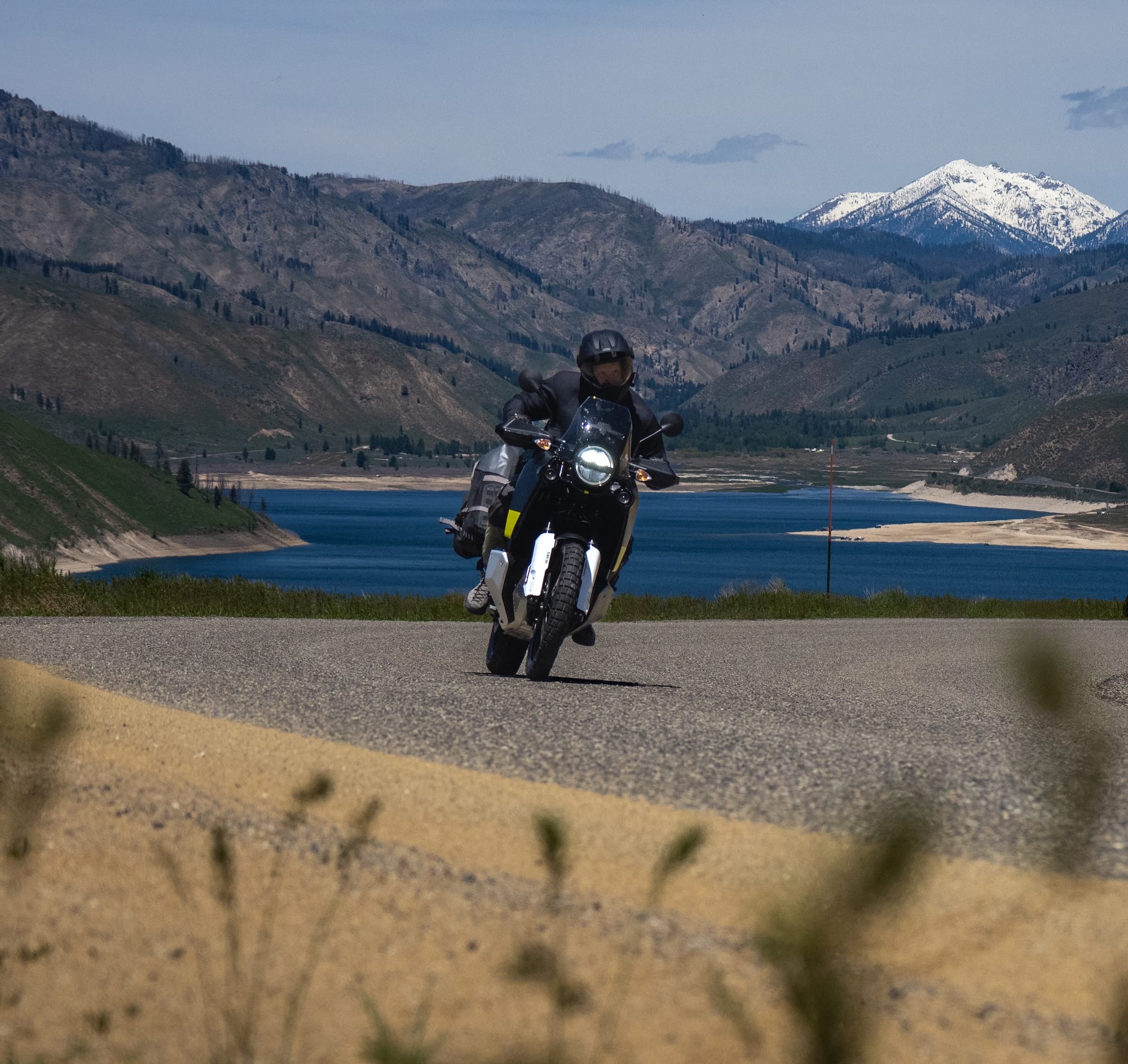
Idaho is unofficially known as the Potato State. If you picture only spuds when thinking of Idaho, though, you’re doing the state a disservice. It has plenty of thrills in store for motorcyclists of all stripes.
Sporty riders will find narrow mountain passes with excellent, twisty pavement. Meanwhile, off-road warriors can delight in Idaho’s more remote trails that really test your dirt riding mettle. And if laid-back cruising is your thing, you can chase the horizon through otherworldly ancient lava fields.
In this guide, I’ll take you on a tour through Idaho and tell you everything you need to know about motorcycle riding in the Gem State.
Yes, gem; not potato.
Geography of Idaho
Idaho is known for both its rugged mountainscapes and its agricultural bounty of potatoes. This dichotomy is a great illustration of Idaho’s geographic variety, which transitions from sky-high mountains to flat fields.
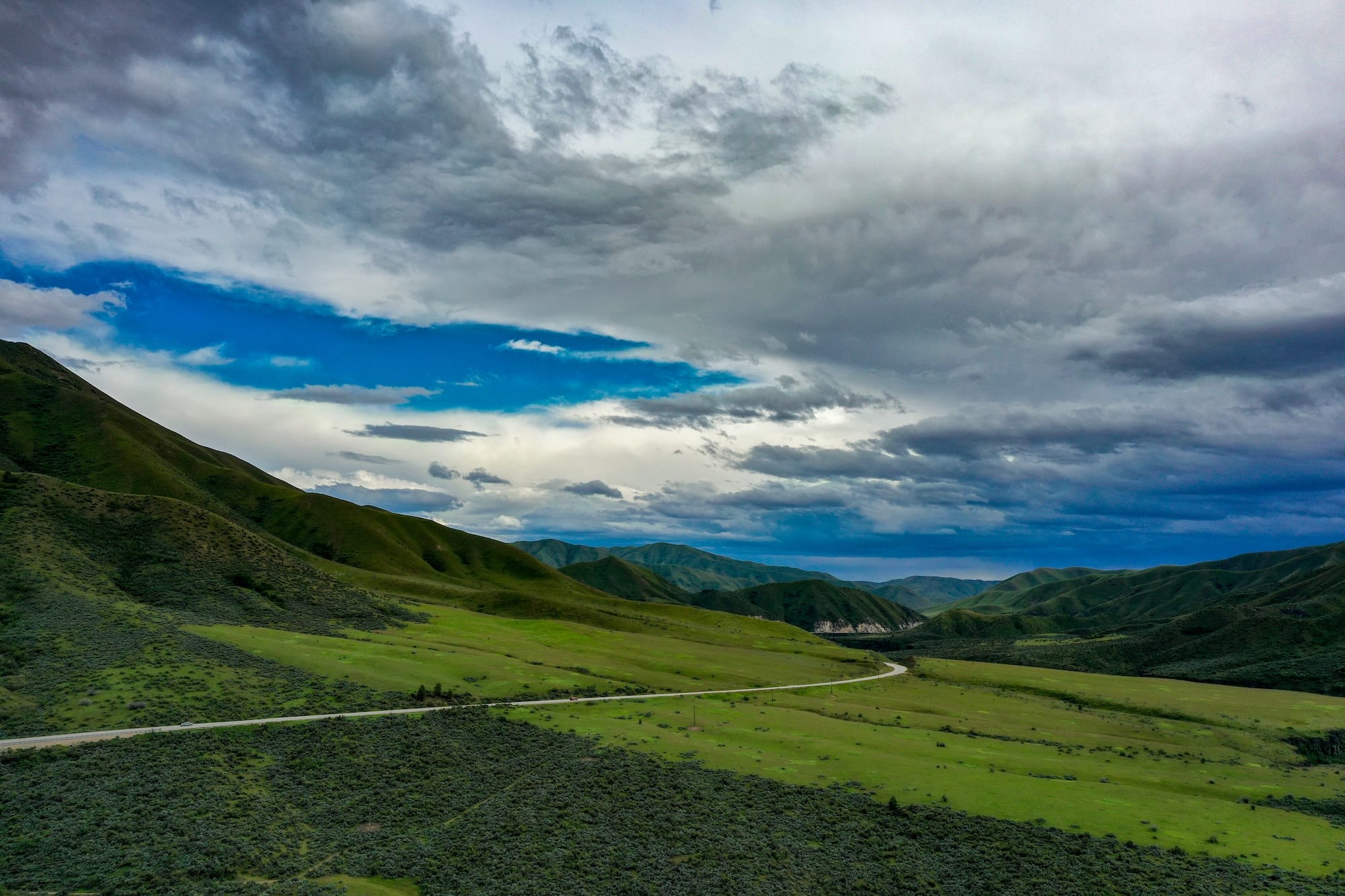
The state is, in general, divided into three main geographic regions: the Rocky Mountains, Columbia Plateau, and Basin and Range Province. The Rockies dominate Idaho’s northern and central regions, while the Columbia Plateau takes up most of the south. In the southeastern corner, you’ll find the Basin and Range Province.
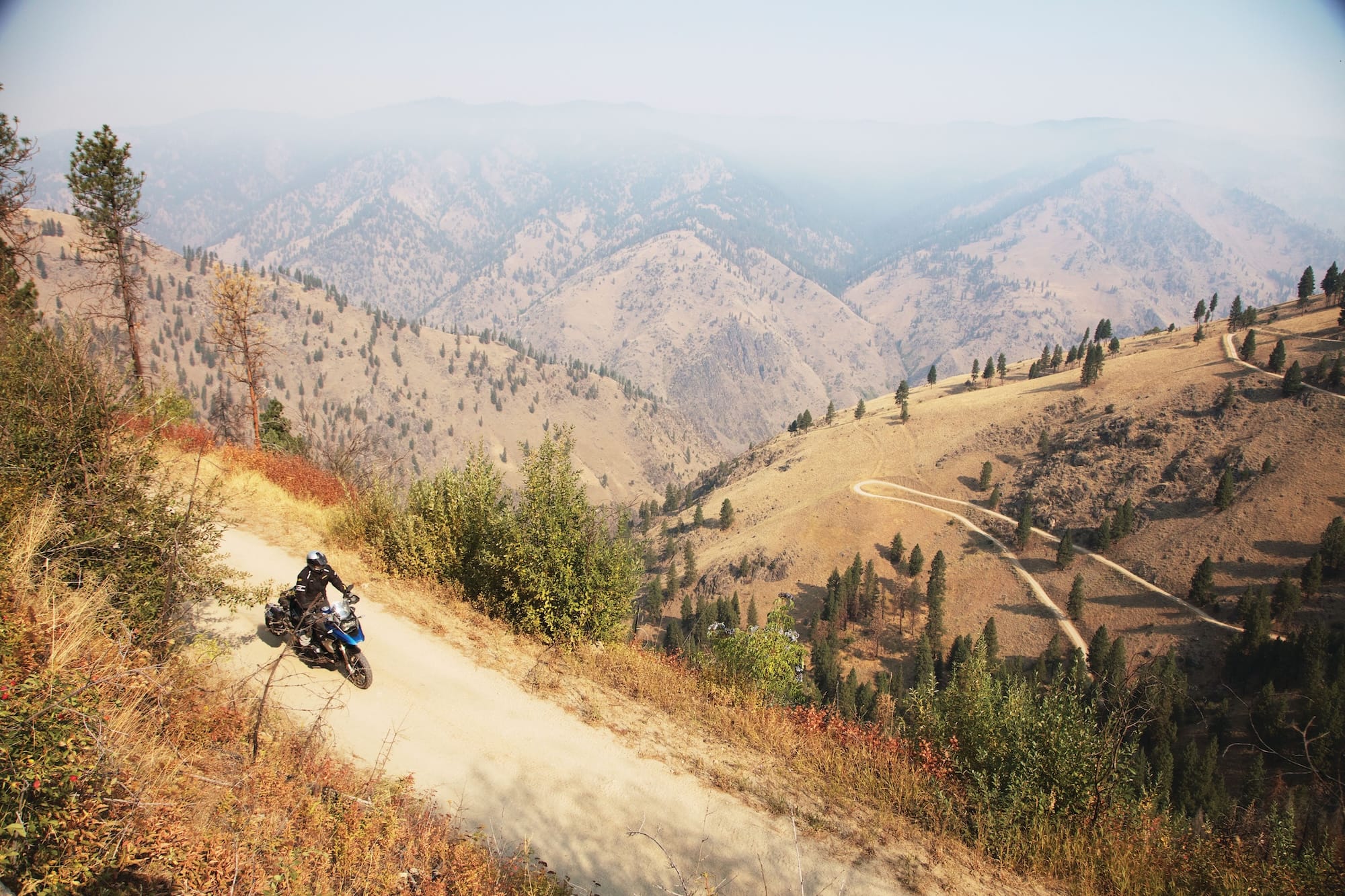
In the Rocky Mountain region, you’ll find, as you’ve certainly guessed, high mountains. This craggy region alternates between high peaks and glacial valleys, with sharp river canyons cutting through it all. The mountains are further divided into various major ranges, including the Bitterroot Mountains, Seven Devils, Salmon River Mountains, and Sawtooth Range.
To illustrate the altitude extremes, the Rockies are home to both Idaho’s highest point (Borah Peak at 12,662 feet) and the deepest gorge in the U.S., Hells Canyon. Riders chasing mountain roads, whether paved or unpaved, have found their mecca.
As you travel south, the peaks get lower and eventually turn into foothills before flattening into the Columbia Plateau. This is potato country. The plain has seen its fair share of volcanic activity in the ancient past, which has created the nutritious, fertile soil that allows the spuds to prosper.
You can still see evidence of that volatile history in the area’s hot springs and unique lava fields, like the Craters of the Moon, which make cruising through these plains a rewarding experience. You’ll also encounter the Snake River, which slithers down from the mountains. The river plain is home to most of Idaho’s population.
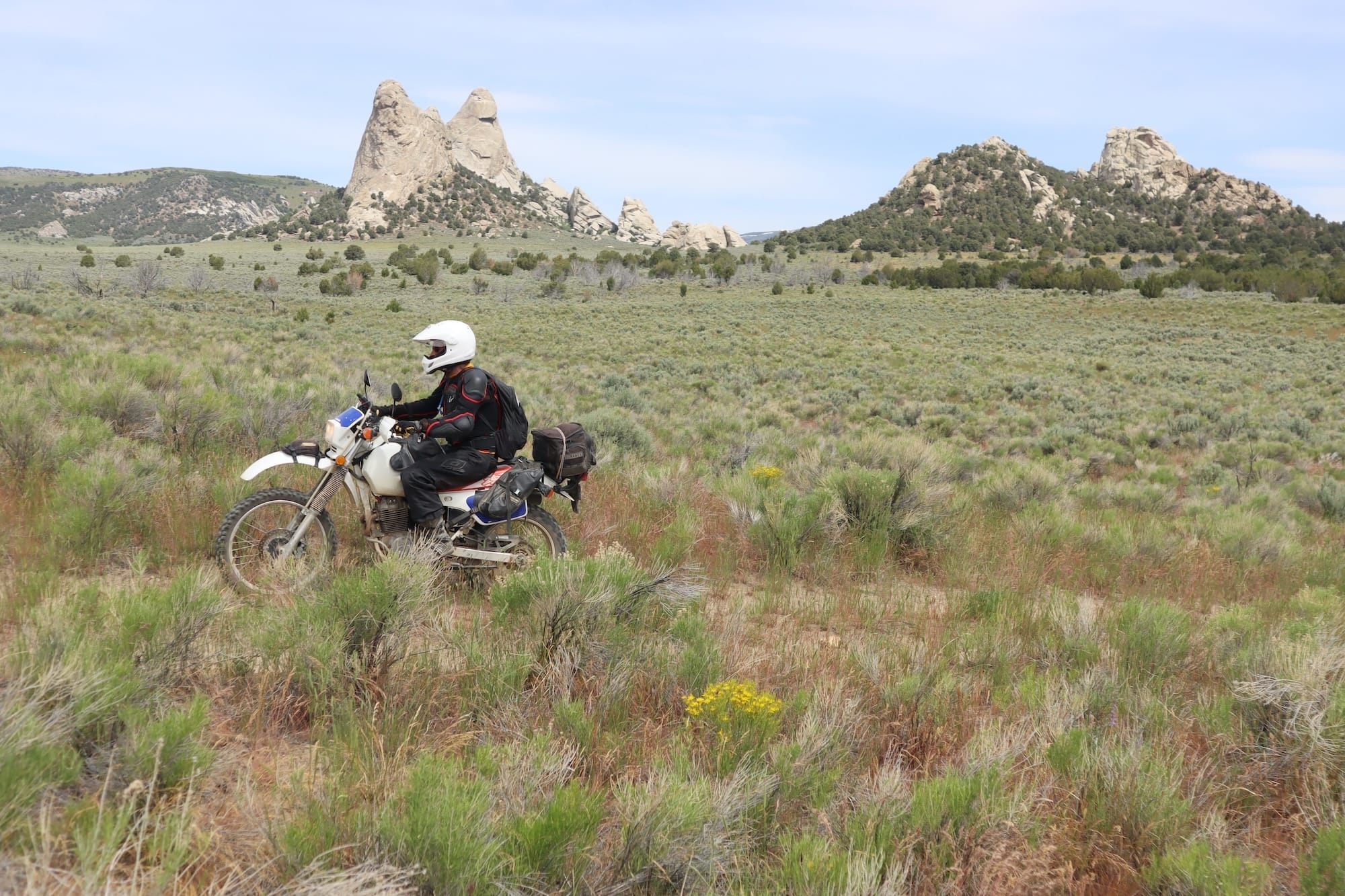
The Basin and Range Province occupies the southeastern corner of Idaho. Its defining features are wide-reaching grassy plateaus and flat basins (shocker), which are broken by the Owyhee Mountains (that’s the titular range). The area’s remote backroads make for a varying and scenic ride.
Ask Idahoans, though, and they will tell you the state should be divided into seven regions (at least if they work in a tourism office). These regions are cultural, not geographic, but they’re worth mentioning, as they can help you plan your ride in greater detail.
North Idaho consists of the panhandle area and features mountains, forests, and alpine lakes. The North-Central region is famed for its river canyons and ancient Nez Perce Native American sites. Central Idaho consists mostly of the Sawtooth Range and brings more dramatic mountain scenery and picturesque lakes to the table.
Southwest Idaho, centered on the city of Boise, features urban foothills and arid landscapes, but also the Snake River and Idaho’s wine country. South-Central Idaho has the Snake River Canyon, with its gorgeous waterfalls (like Shoshone Falls), lava flows, and bizarre rock formations.
Eastern Idaho’s scenery consists of volcanic plains through which rivers and valleys slice. It’s also a gateway to Yellowstone and the Tetons in Wyoming. Finally, the Southeast region is renowned for its hot springs and is also the location of the Shoshone-Bannock Native lands.
Top Routes and Destinations in Idaho
The Salmon River Scenic Byway is arguably Idaho’s most famous motorcycling route. As the name implies, it follows its titular, incredibly scenic river through its valley/canyon along US 90 and SR 75. As you ride, you get to enjoy curves both wide and tight as the road traces Snake River’s contours. Learn more in our Salmon River Scenic Byway travel guide.
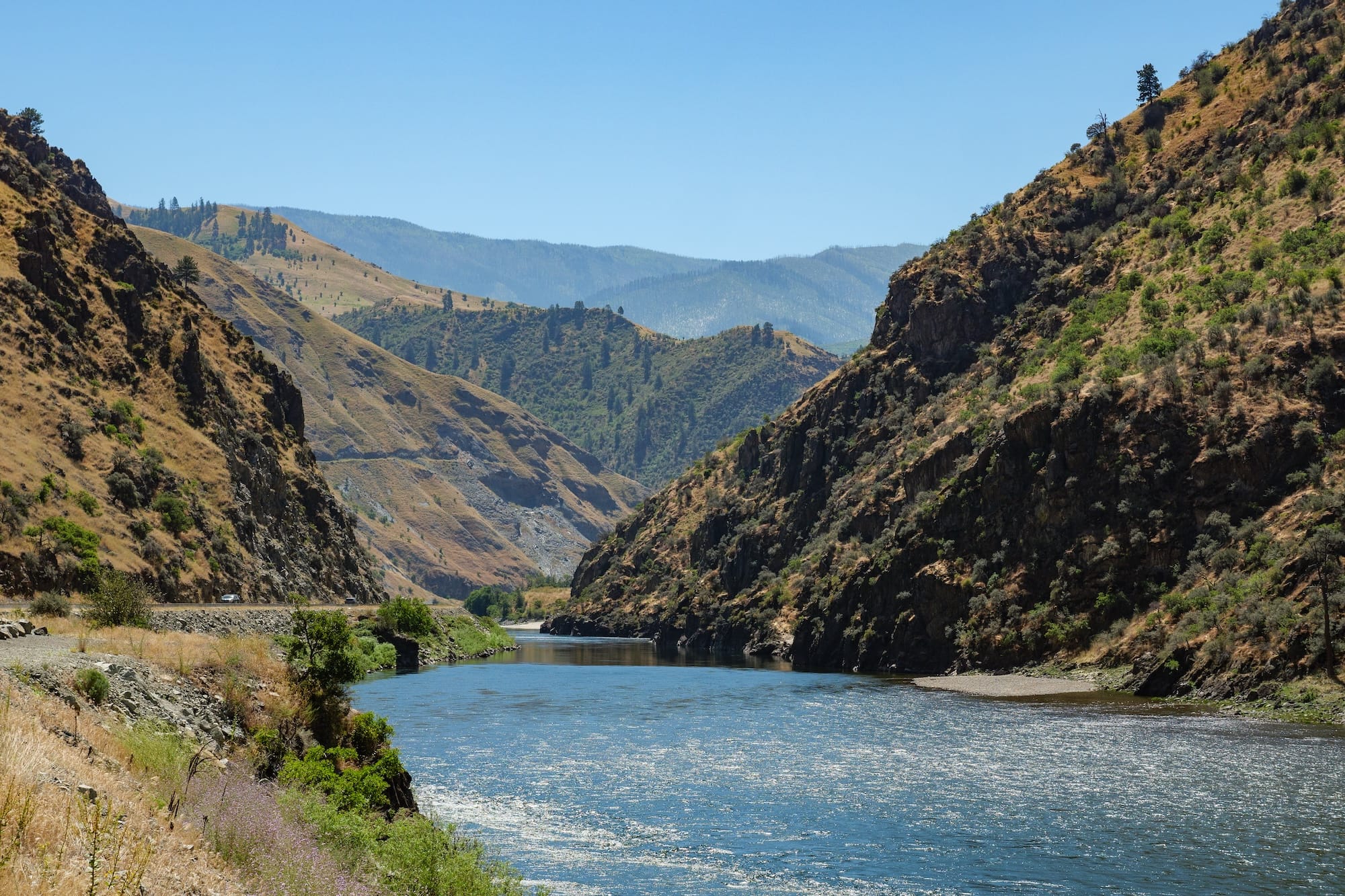
But if it’s curves you’re after, you must put your wheels on US 12 and ride over Lolo Pass. This road, too, meanders along a river (the Lochsa River). A sign near the beginning of the road proclaims “Winding Road Next 99 Miles”—need I say more? Yes! Read our Lolo Pass Classic Roads highlight.
Want to connect both of these incredible routes? Then I recommend riding our Idaho High Country Tour. In addition to the Salmon River Scenic Byway and Lolo Pass, this route explores Idaho’s mountains across five national forests on paved roads. Should you prefer dirt, you can get a similar experience on unpaved trails by following the Expedition Idaho route.
All those mountain roads and trails can leave you tired and dusty. There’s no better way to soothe your ride-weary body than a plunge in one (or more) of Idaho’s famous hot springs. Our Hot Springs Tour prowls the Sawtooth National Forest and Idaho’s southern Rockies searching for the best pools to soak in.
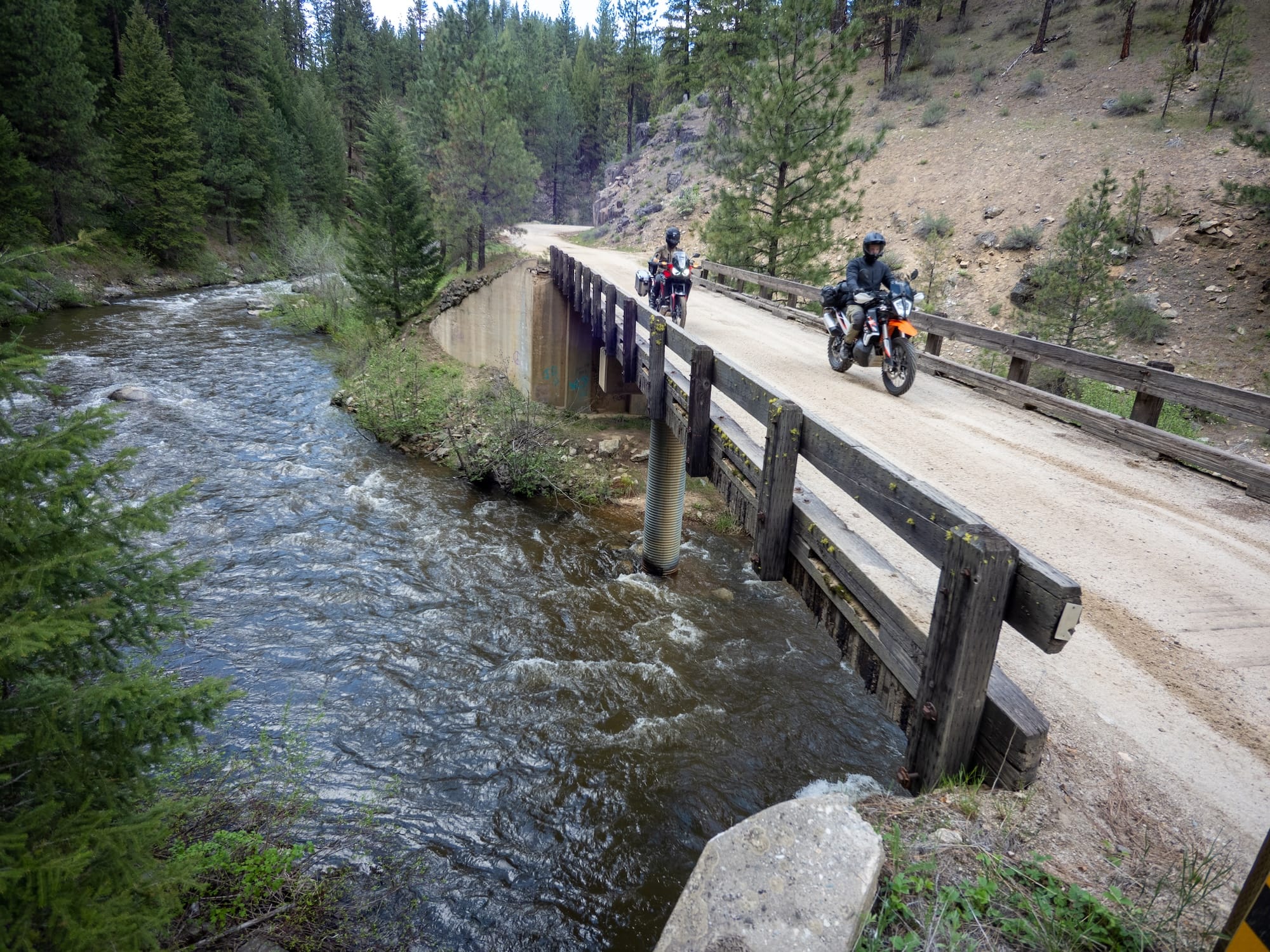
Another great way to explore the northern mountains and beyond is by doing a multi-day tour out of Lewiston. At the junction of the Snake and Clearwater rivers, this city is ideally located for outings into Idaho’s mountains, Washington, and Oregon alike. Get travel inspiration for your motorcycle trip with our Lewiston Shamrock Tour®.
Lewiston is named for Meriwether Lewis, who, together with William Clark, traveled through Idaho in the opening years of the 1800s on their expeditions to the Pacific. It was an arduous and often fatally dangerous journey. You, luckily, can follow the brave explorers’ path conveniently on your motorcycle along the Lewis and Clark Trail.
There’s so much natural beauty in Idaho that you might find it challenging to see enough of it. Fret not—we have you covered. Our Idaho Byways tour packs six scenic byways in the plains and mountains into just two days. Just remember that you have to keep one eye on the road, too.
Idaho’s plateau regions offer plenty of astounding beauty, as well. Boise is the place for touring the plains, ranking as the safest city for motorcycling in the U.S. Our Boise Shamrock Tour takes you on four action- and vista-packed jaunts out of Idaho’s capital. If you’re pressed for time, make sure to at least hit our Boise City Escape route for a quick dose of jaw-dropping curves.
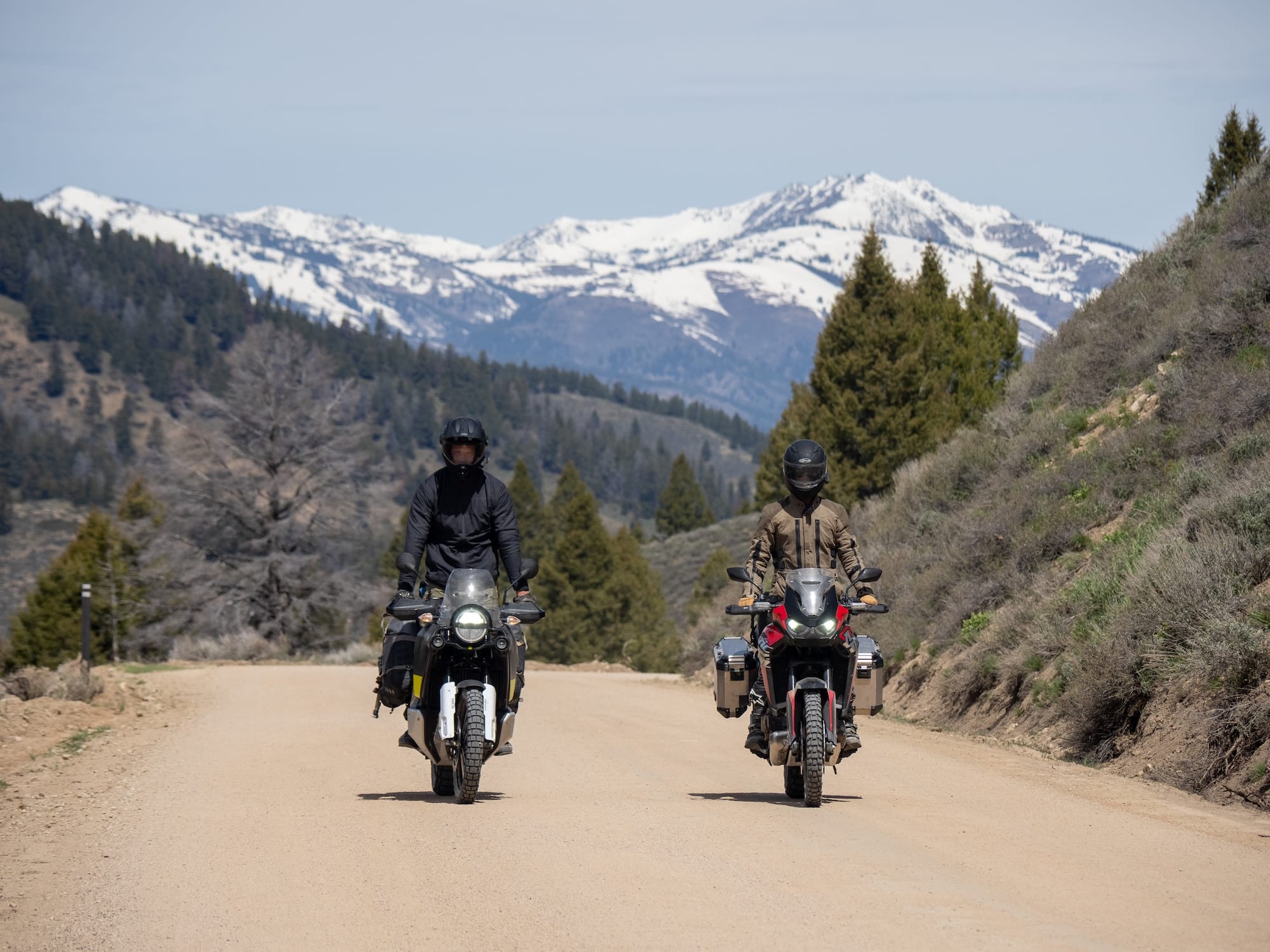
Riding in Idaho’s southern parts, you cannot miss visiting the Craters of the Moon National Monument. This ragged, pitch-black lava field seems utterly inhospitable to life, but curious plants still thrive among the desolation. It really makes you feel like you’re riding on an alien planet.
Being on the U.S.-Canada border, Idaho makes it easy for you to roll up north for a trip abroad. You could spend days exploring Canadian roads, but for a quicker romp north of the border, check out our Selkirk Loop route.
ADV Motorcycle Routes in Idaho
Idaho is one of the best places in the country for ADV riding. Many routes mentioned above either have gravel or feature branching unpaved side roads. You could also just go riding in the national forests—you’ll find plenty of forest roads.
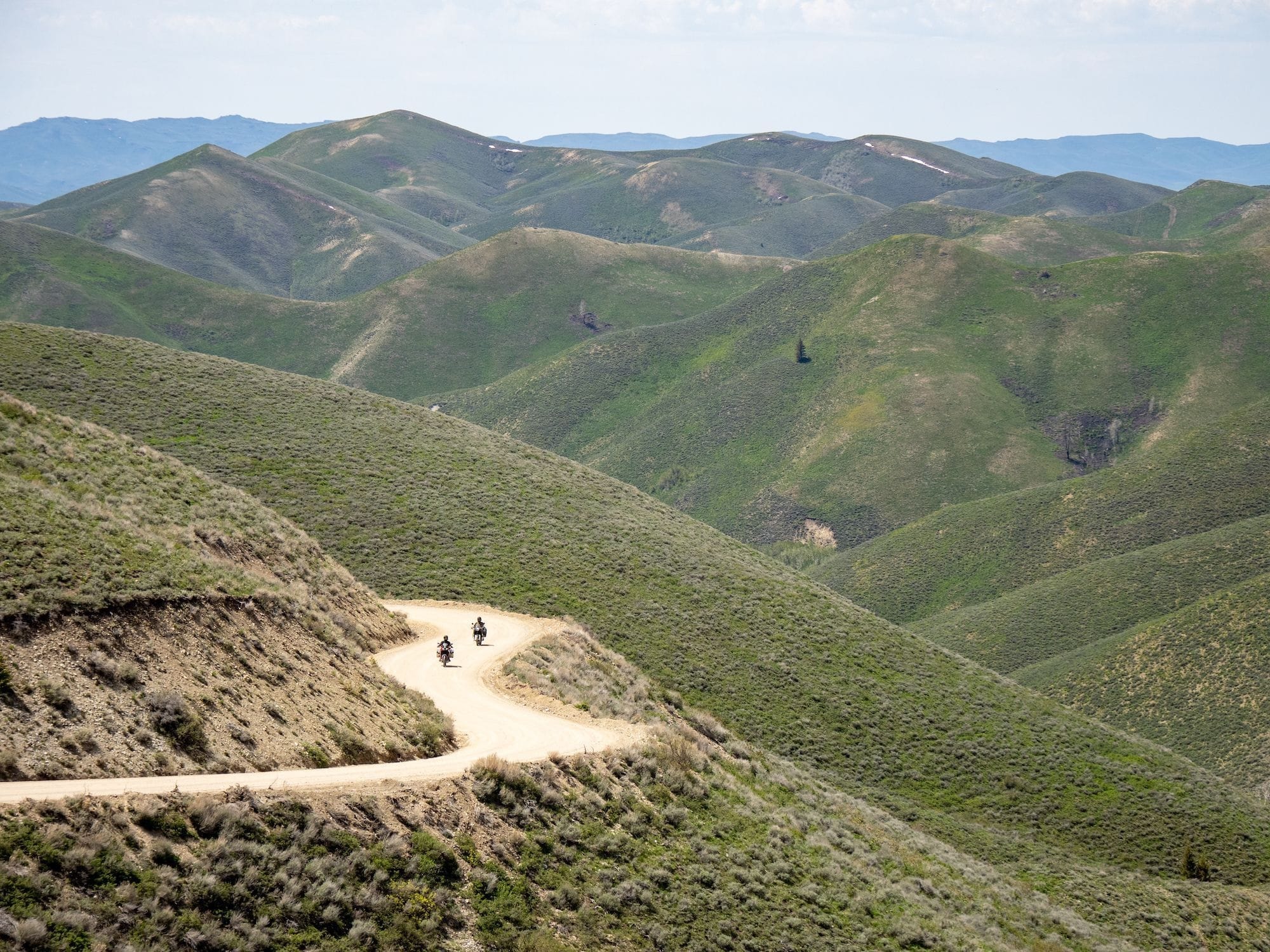
Yet, there’s one off-road challenge in Idaho above all others: Lemhi Pass. This 7,323-foot pass crosses the Bitterroot Mountains at a spot through which Lewis and Clark crested the range. The path up the mountains is difficult and perilous even with modern machinery, but the views are worth it. Read more in our Lemhi Pass overview.
Two other noteworthy ADV rides in Idaho are the Magruder Corridor and the Lolo Motorway. The Magruder Corridor is a 101-mile single-lane trail traversing the Nez Perce and Clearwater national forests. Meanwhile, the Lolo Motorway is an unimproved part of Forest Service Road 500 in the same forests that partly follows the Lewis and Clark Trail.
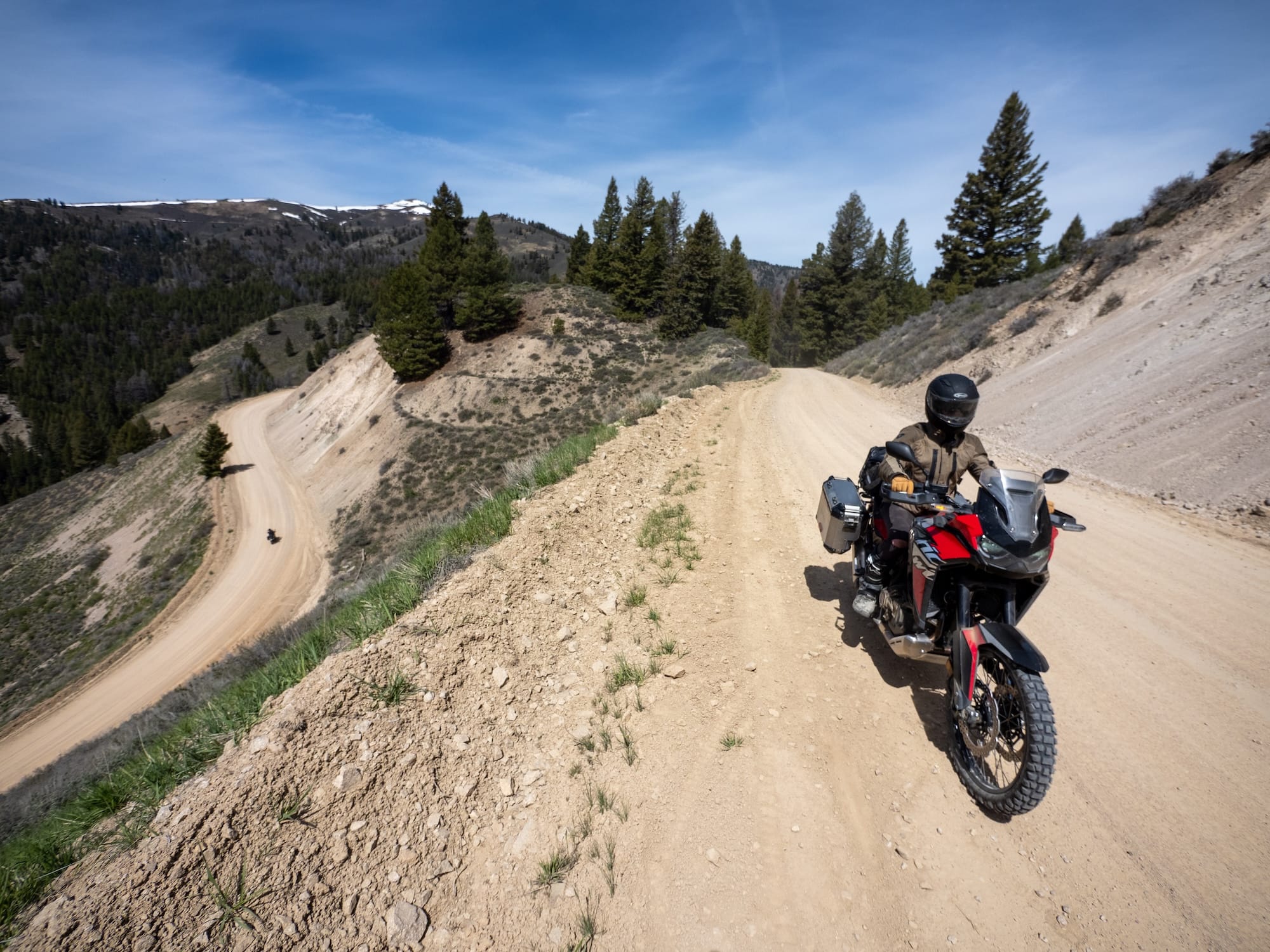
In the southwestern parts of Idaho, you’ll find many private OHV areas. Sure, you’ll have to pay to get on the trails, but it also means you can enjoy the trails without worrying about getting lost.
Tips for Motorcycling in Idaho
The best time—and only time, depending on the region—to ride Idaho is July-October. You’ll get to enjoy consistent temperatures, and the mountain roads are (mostly) free of snow, river canyons are dry and predictable, seasonal fuel stops are open, and there’s lower wildlife activity than in spring. That said, spring (May-June) is a good season for riding in Idaho’s lower plains, like around Boise.
Remember to mind your speed in the Gem State. Riding too fast for the conditions is one of the leading causes of motorcycle crashes in Idaho. The weather can change quickly, especially in the mountains, with rain and high winds appearing suddenly.
In such situations, posted speed limits are often too fast for safe riding. Pump the brakes and ride with caution.
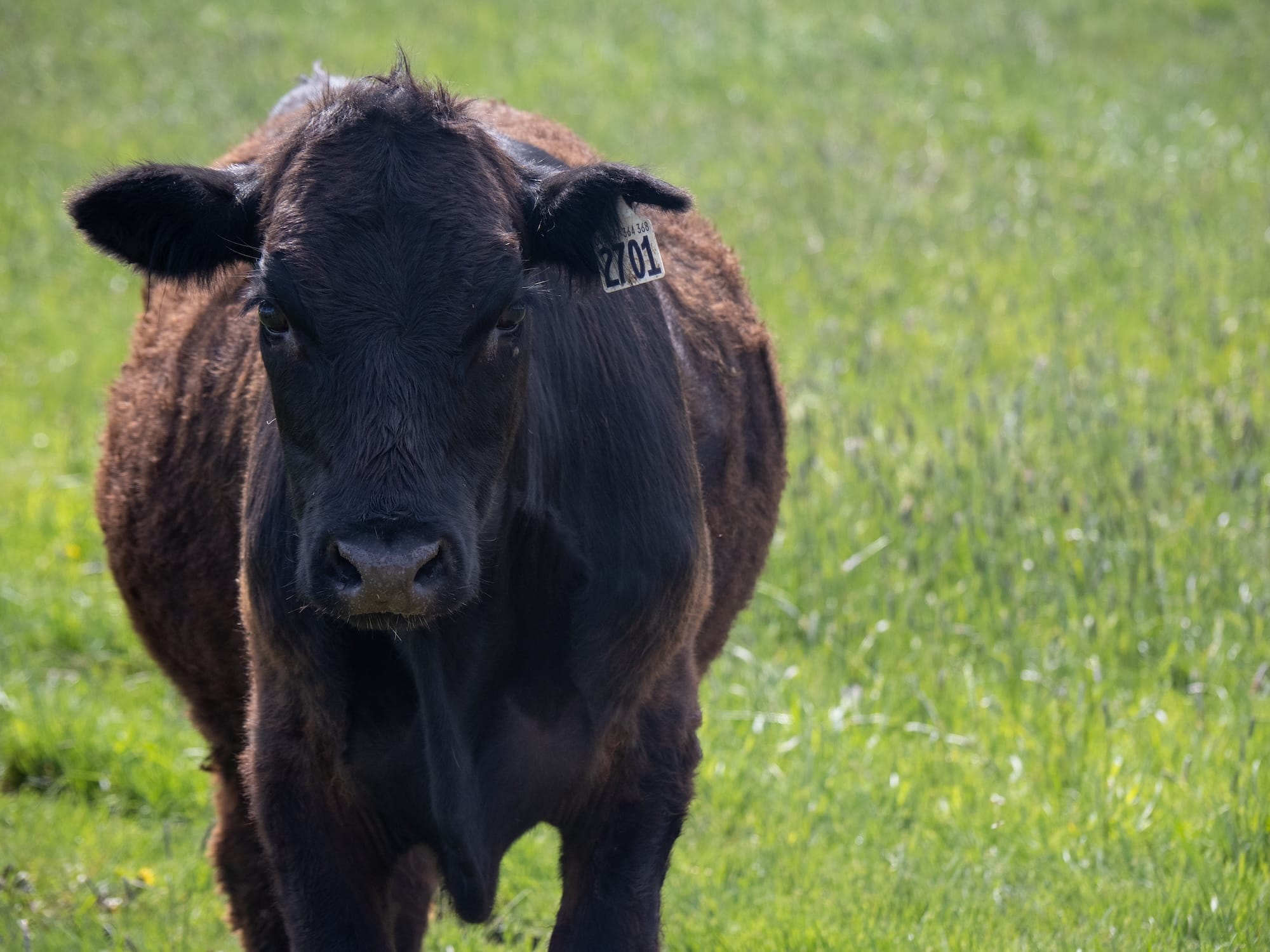
Animals are a constant hazard in Idaho. Deer and elk are common in the state’s remote areas, especially during seasonal migrations in late fall and early spring. Most of Idaho’s agricultural areas are open range, so livestock can freely wander onto the road. Watch out for cattle guards.
By Idaho law, helmets are optional for riders older than 18—but you will, of course, consider them mandatory. Lane splitting is illegal, while sharing is okay with one other bike. Fenders are required on all wheels to keep your motorcycle street legal in Idaho.
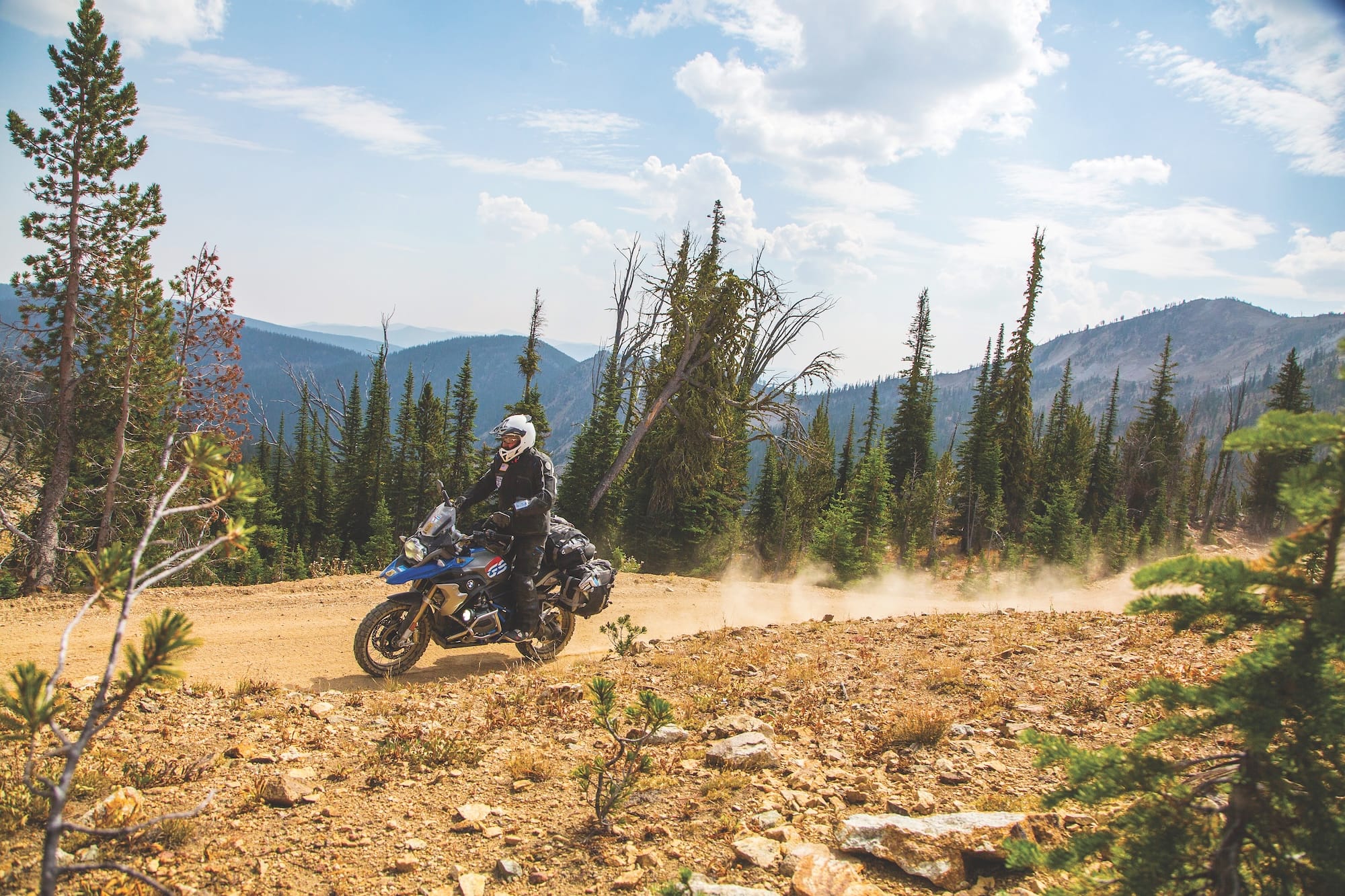
Idaho also follows the red light “dead signal” rule. If an automatic traffic light fails to detect your motorcycle, you may proceed through the intersection on a red light after one full light cycle, as long as you stop and yield first.
Idaho motorcycle events include:
- Boise Roadster and Motorcycle Show (early spring)
- Mackay Motorcycle Rally and Rodeo (summer)
- Idaho State CMA Rally (summer)
- 2 The Border
Off-Bike Activities in Idaho
Off the saddle, Idaho is an outdoor activity kind of state. However, you have plenty to choose from. With so many national forests, lakes, rivers, and plains, everything from hiking to spelunking is on the table. Should you prefer the indoors, you can familiarize yourself with Idaho’s frontier past in museums and local exhibits.
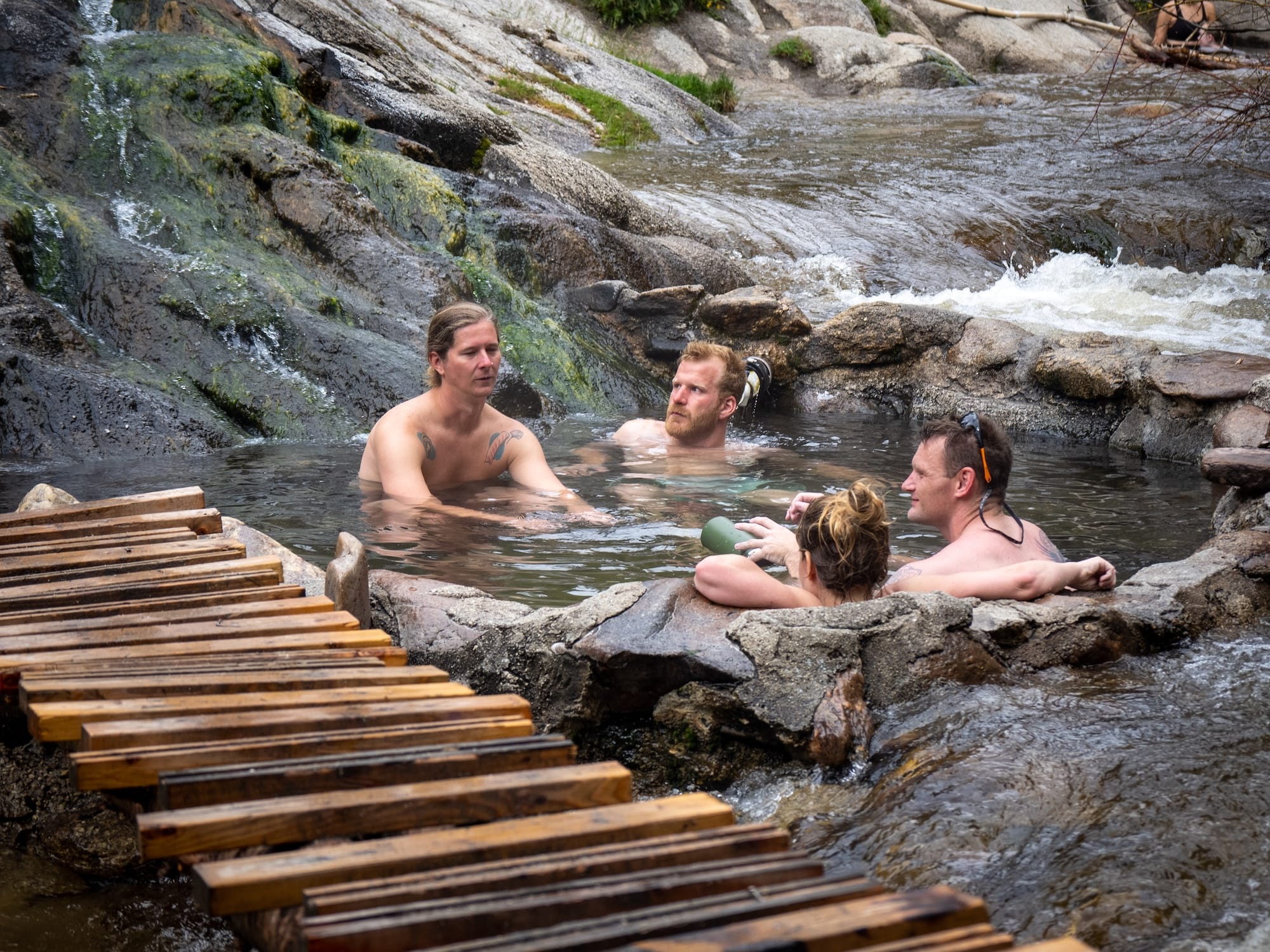
Some of the most popular tourist attractions in Idaho include:
- Hot springs
- Lake Coeur d’Alene
- Sandpoint, ID, and Lake Pend Oreille
- Hells Canyon
- Nez Perce National Historical Park
- Boise, ID
- Boise River Greenbelt
- Old Idaho Penitentiary
- Bruneau Dunes State Park
- Shoshone Falls
- Craters of the Moon
- Thousand Springs State Park
- Stanley, ID
- St. Anthony Sand Dunes
- Minnetonka Cave
- Lava Hot Springs, ID