Review: 2026 Yamaha WR125R
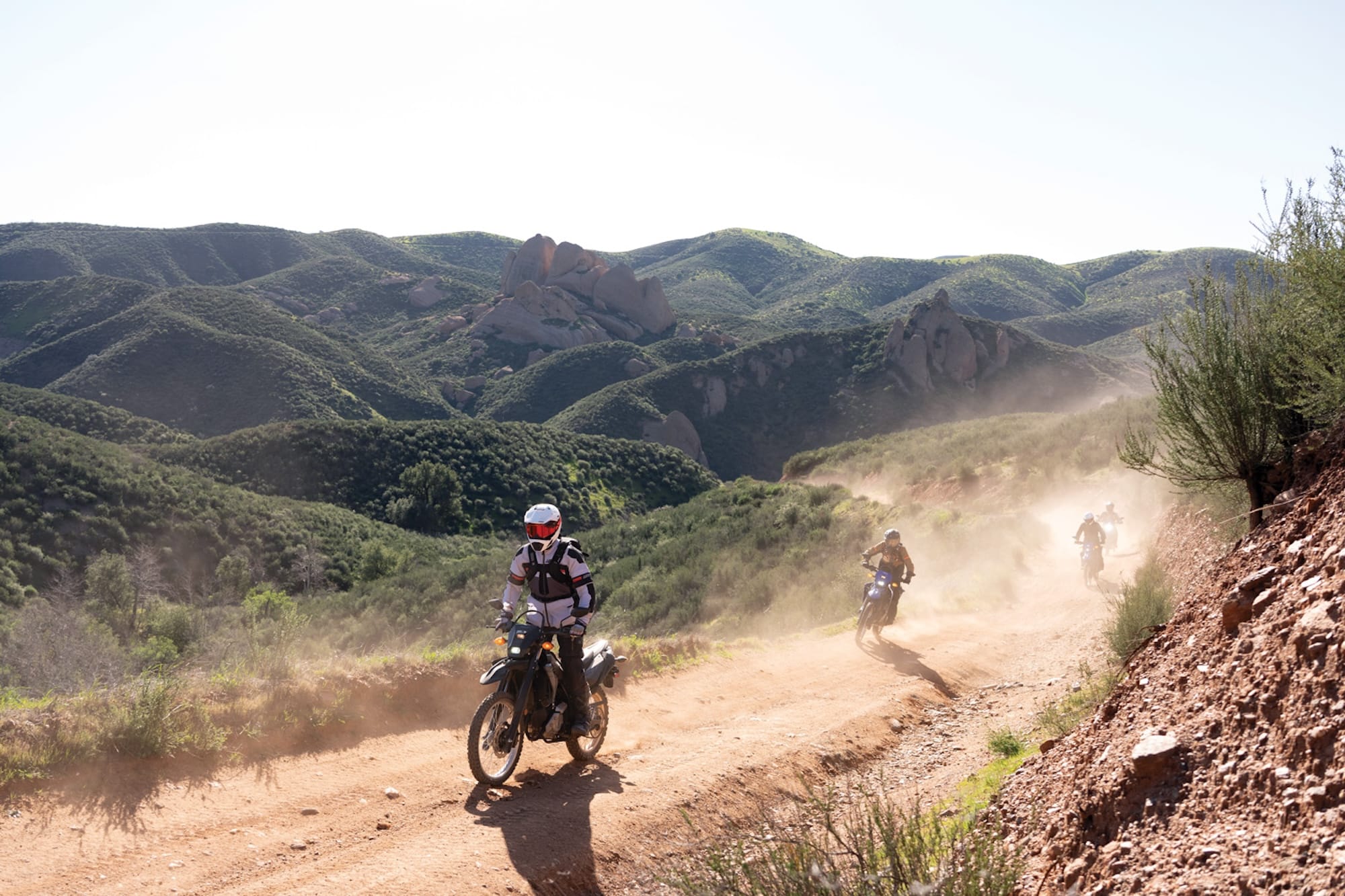
In a race to the bottom, you can sometimes win. Performance motorcycling is often characterized by displacement one-upmanship, bleeding-edge tech, and gram counting for optimal weight profiles. Ironically, fostering continued growth in motorcycling as a whole could benefit from an emphasis on the polar opposite of these things. That’s where the 2026 Yamaha WR125R rolls in.
Taking a motorcycle-curious person with no prior experience and throwing them on a Yamaha R-anything would potentially be a disservice. It’d be like teaching someone to surf at Jaws on Maui or learning marksmanship with an M1 Garand. With the WR125R, Yamaha has targeted three primary consumers, first being new riders. The WR125R offers an extremely approachable machine in both form and price for anyone curious about either on- or off-road riding.
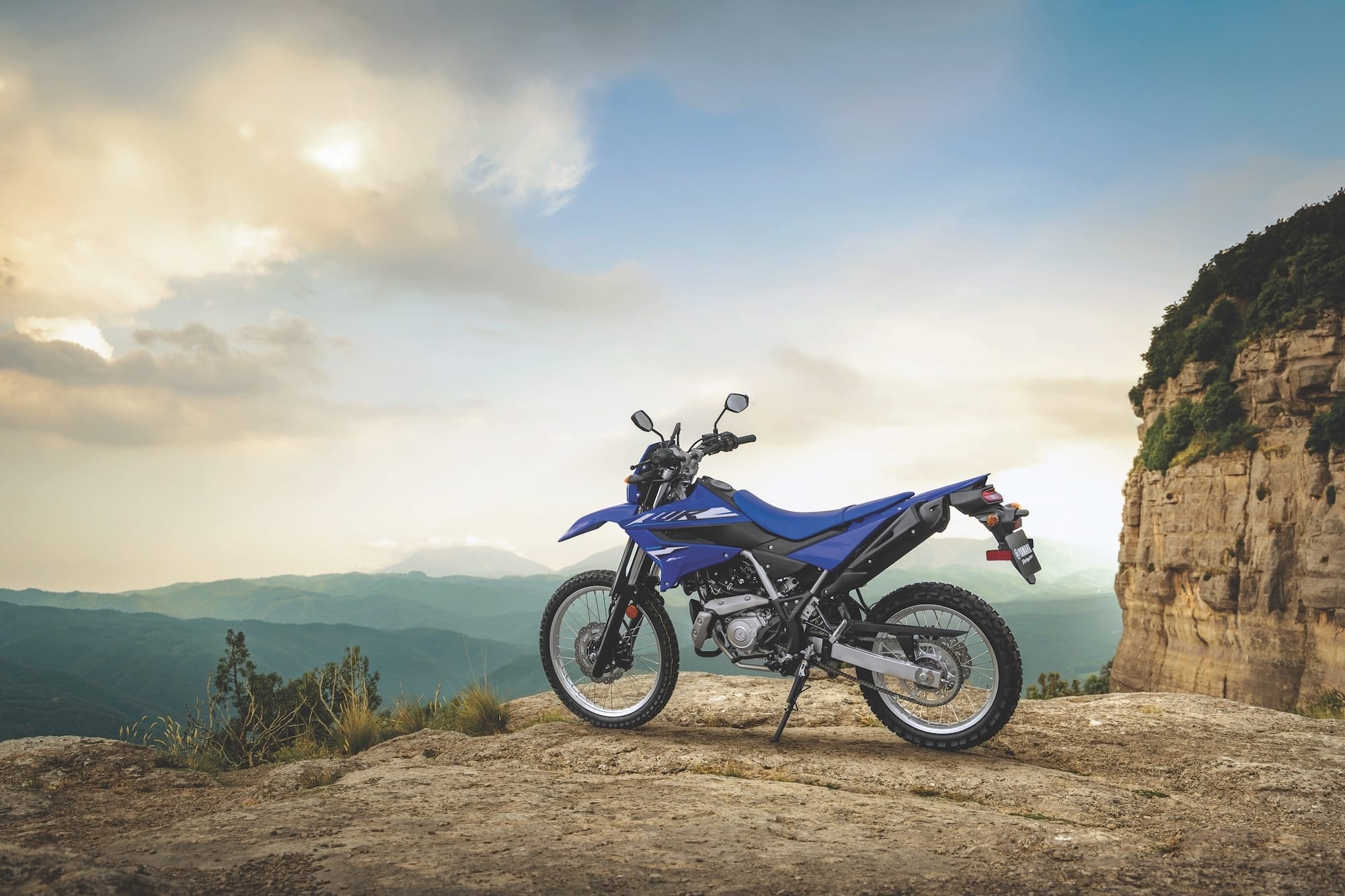
The second group could fall into the category of a market capture exercise: riders with experience on pavement or gravel, but not both. Dirt riders wanting something with a plate to get around town or street riders curious about those unpaved trails veering off their regular routes would be hard-pressed to find a new bike with a more welcoming price and robust feature set.
The third group is what Yamaha calls “organic” consumers—experienced riders looking for an extra motorcycle. The WR125R is excellent for quick trips around town, riding on a hitch carrier for camping adventures, or simply providing something to ride if one of your main bikes is unavailable.
A Worldly Motorcycle
Heading into this test was an interesting experience. While reviewing the bike’s press materials, very little about the U.S. market came to mind. However, the WR125R seemed to reflect my experiences riding in many other countries.
Anyone who has traveled through Latin America, Africa, or Asia knows that small-displacement bikes are the norm in these regions. For example, two-stroke Yamaha DT175s are ubiquitous in portions of Central America. Poring over a spec sheet for one of these small displacement workhorses might seem underwhelming when compared to other dual sport motorcycles. However, specs don’t always tell the full story of a bike’s capability. Seeing a family of five crossing a rocky riverbed aboard a sub-200cc Yamaha in Nicaragua, smiling and waving as they passed by, goes a long way to resetting one’s opinion about what small motorcycles are capable of.
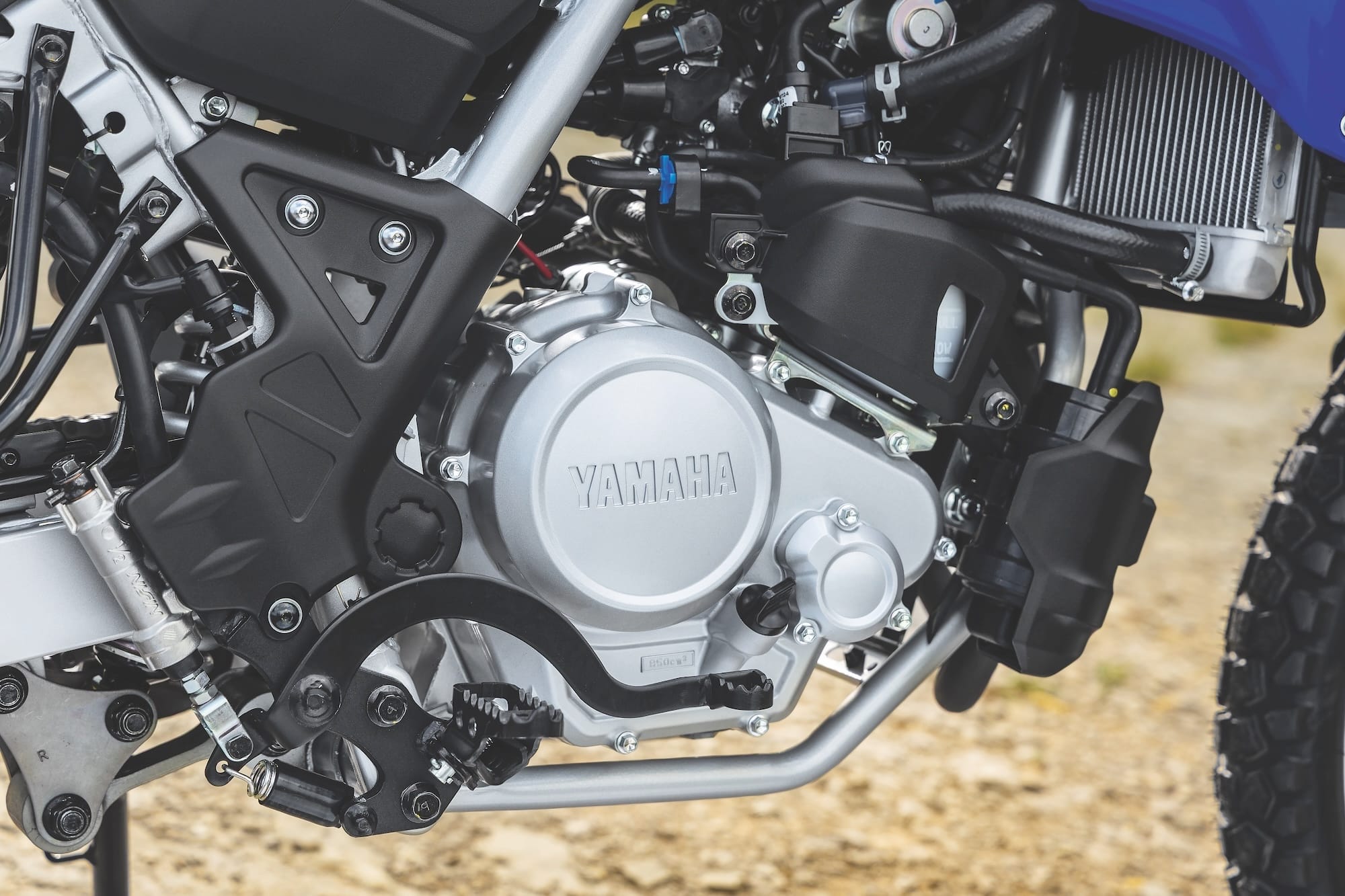
The WR125R’s solid and simple design hides some cutting-edge tech, which affords a very different riding experience than the engine size might imply. At the top of the list is the incorporation of Yamaha’s variable valve actuation (VVA) technology. In extremely simple terms, it’s like getting two engines in one.
If you’ve pulled a motorcycle engine apart to throw in a hot cam, you know the amount of work the process requires, as well as the trade-offs at low rpm for better performance as you approach redline. Yamaha’s VVA system gives you both. The engine starts out with a mild camshaft profile until it reaches 7,400 rpm, at which point an electronic solenoid activates and engages the high-rpm camshaft profile.

This technology is not unique to the WR125R or Yamaha, for that matter. Similar solutions, such as BMW’s ShiftCam technology, are designed to accomplish the same results. The surprising part is seeing this high-level design, which can be found on bikes with base MSRPs north of $23,000, integrated into an entry-level motorcycle starting at $3,999.
Details Where They Count
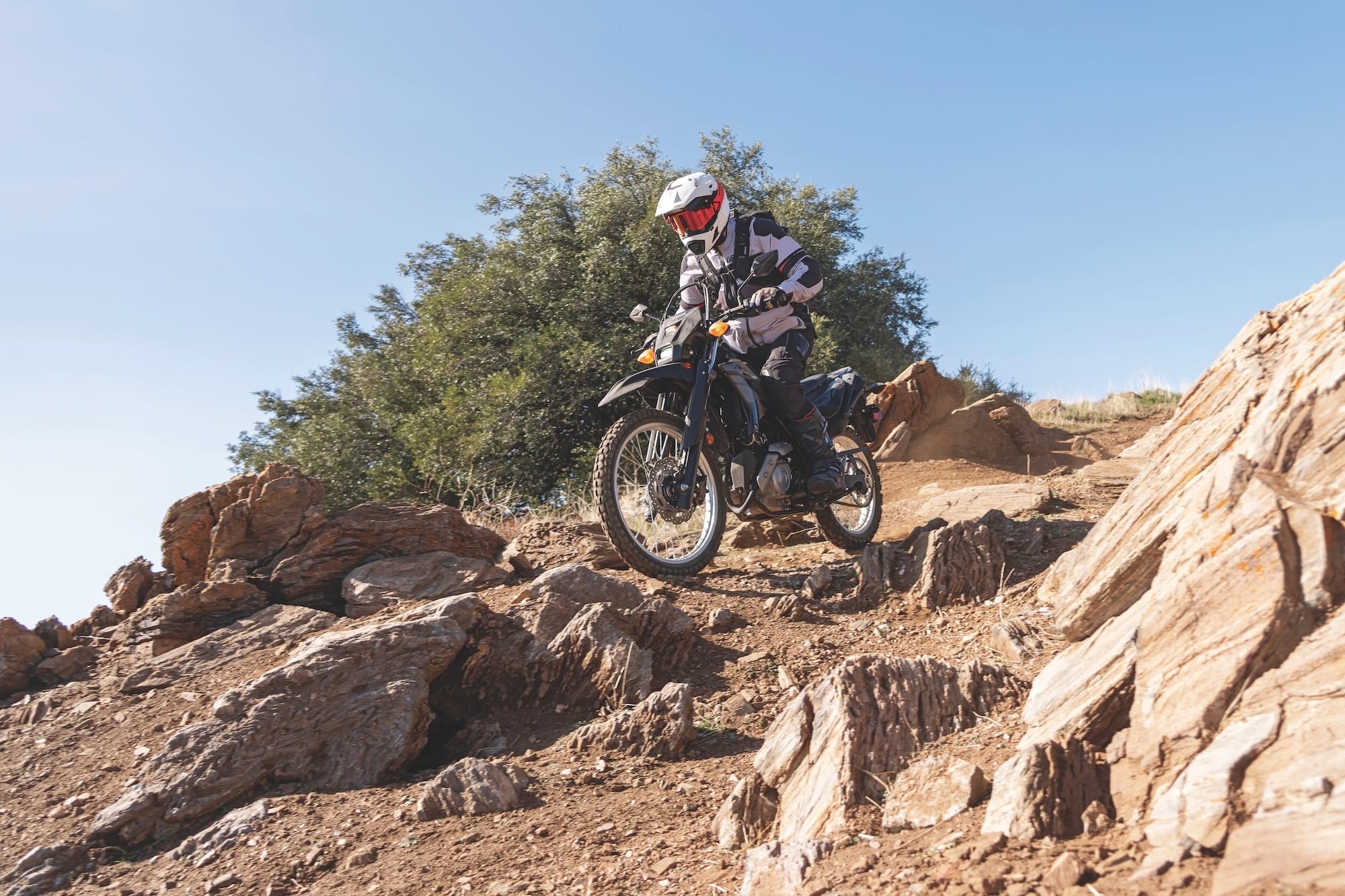
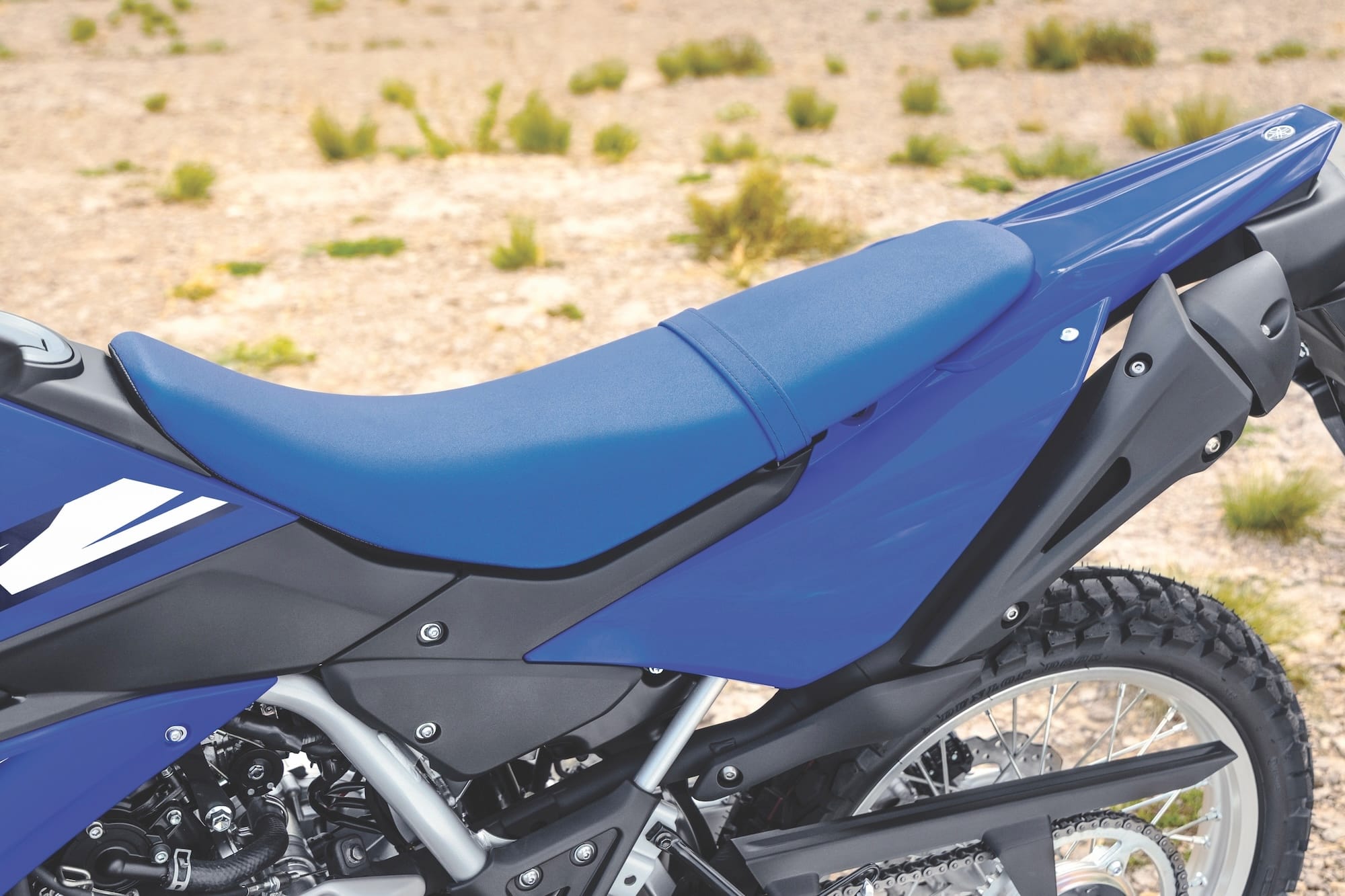
Niceties on the WR125R don’t end with the engine internals. The semi-double cradle steel frame rides on KYB suspension with 7.3 inches of travel in the rear and 8.5 inches of travel up front. The 21/18-inch spoked aluminum wheels run Dunlop D605 stock tires. An LED headlight and high beam are paired with what I can only assume is a halogen daytime running light—an odd feature, as the regular LED headlight is always on. The headlight design almost seems to be a nod to Kawasaki’s diesel-powered KLR650, built for military use.
A refreshingly simple LCD offers all the usual suspects of speedo, tach, a couple of trip odometers, a clock, and so on. There is even smartphone connectivity available through Yamaha’s Y-Connect app, offering features such as a riding log, fuel consumption records, a malfunction history log, and a map showing the bike’s current parked location. One thing this display has that I’ve never seen on another LCD is the VVA indicator. It’s a seemingly minor but crucial point about riding this bike—that discrete gauge is a visual representation of what makes the engine so unique.
Small Bike, Smart Tech
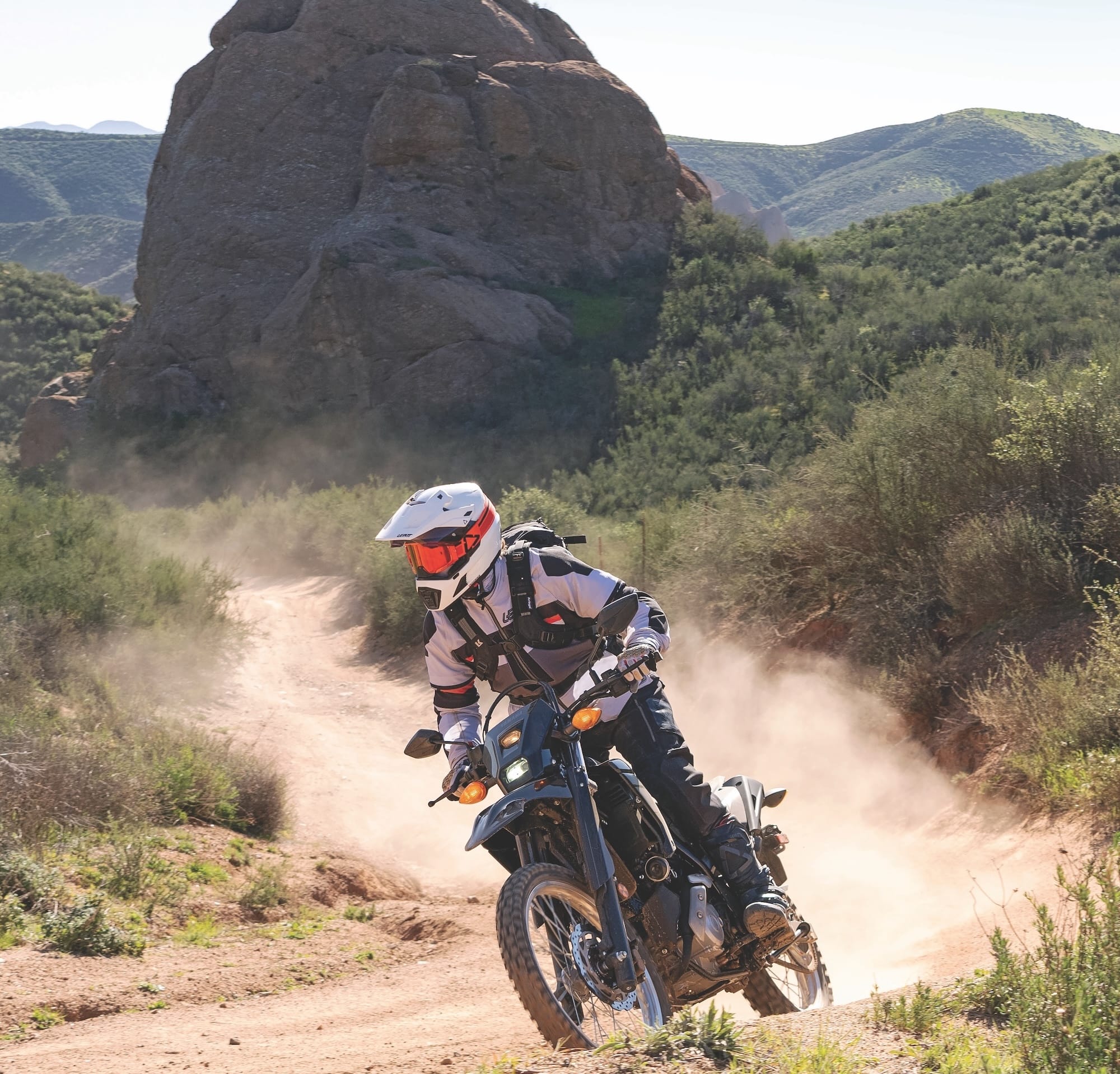
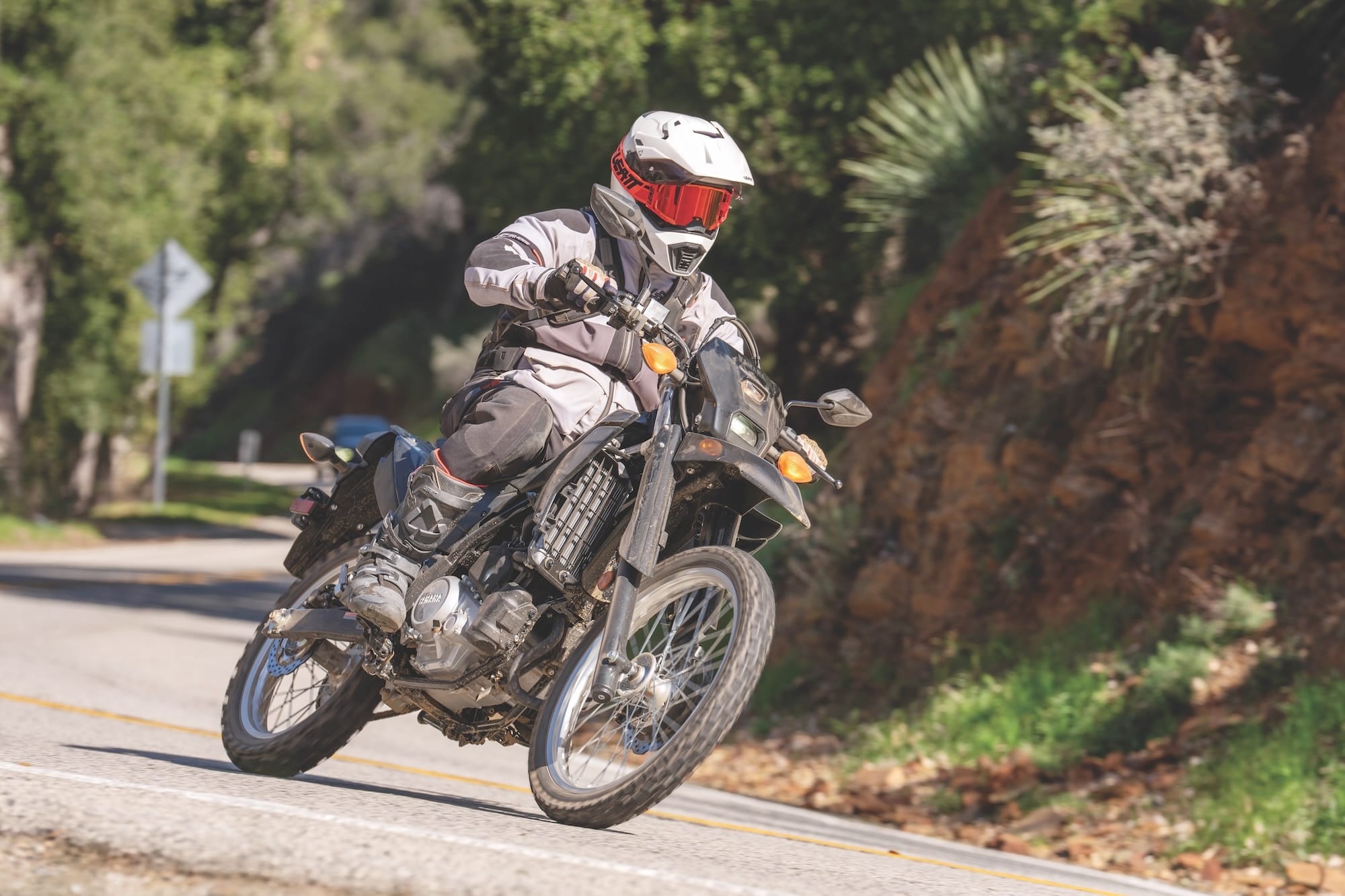
On the road, as you begin to exceed 7,000 rpm, the VVA solenoid kicks in before the engine starts to become a bit asthmatic for air and fuel. At 7,400 rpm, the engine control unit (ECU) instructs the solenoid to activate the high-rpm camshaft profile, and the engine keeps humming all the way up to redline at 11,500. Mind you, it’s still a 125cc powerplant, but this electronics package allows the motorcycle to use the entire range of available power.
The engine seemed happiest well above 10,000 rpm whenever you needed a boost of power on either twisty pavement or rough off-road climbs. My experience on the trail showed the bike pulled fine even approaching 5,000 rpm, just as long as you were cruising and not climbing a trail or intending to accelerate aggressively.
Emphasizing the “new rider” consumer category I referenced earlier, the WR125R’s braking system has non-defeatable front ABS. While I definitely felt the ABS intervene occasionally, it was only in the most gnarly portions of the test. Moreover, the lever pump and chatter from the ABS getting confused in looser terrain were roughly within the realm of what I’ve experienced on bikes costing nearly three times as much as the WR125R.
In short, the brakes are effective, and the lack of rear ABS offers the necessary controllability for true dual sport riding. The 267mm rotor up front and 220mm rotor in the rear are more than ample for the WR125R. To put into context just how small and approachable this Yamaha is, the WR125R’s 267mm front rotor is the same size as the rear brake rotor of a KTM 1290 Super Adventure R.
Fun for a Low Price
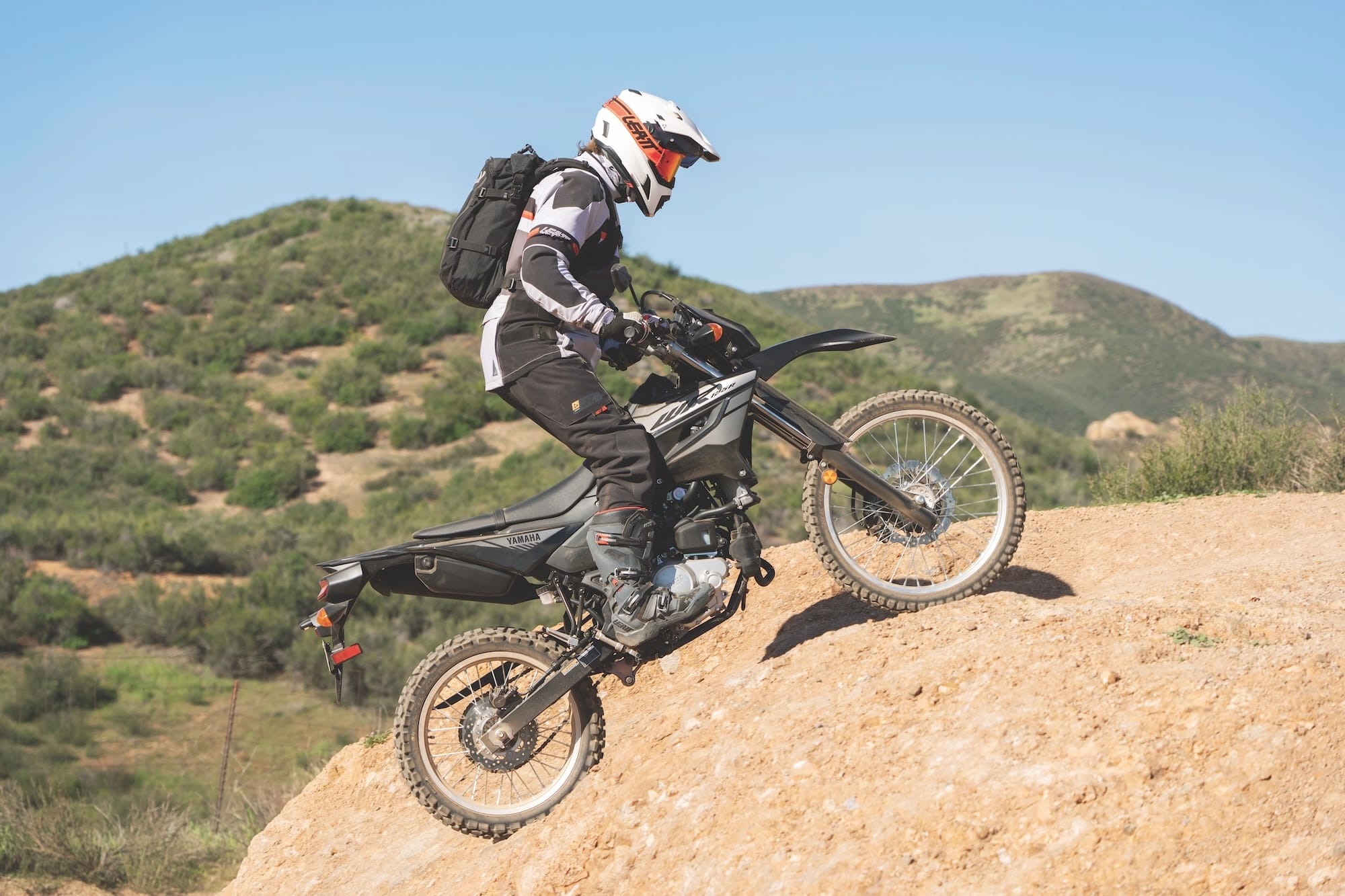
Part of me wants to say what I liked the most about the WR125R was the suspension. Small-bump compliance made for an unexpectedly comfortable ride over mildly rocky terrain. Meanwhile, the bike’s capacity to absorb big hits seemed to exceed the level it was ever intended for.
Another part of me finds the VVA technology most impressive, allowing the bike to best utilize the inherently limited power output of the 125cc four-stroke engine. But, there’s also a seemingly simple LCD with hidden Bluetooth connectivity. And LED lighting. And passenger pegs. And an MSRP of $3,999. For everything other than high-speed superslab freeway droning, it’s tough to find a reason I wouldn’t like having a WR125R in my garage.
Technical Specs
+sleek and modern styling, approachable bike, surprising tech, low price
– not freeway legal, around 65 mph top speed, no undercarriage protection, no USB port
Distributor: Yamaha
MSRP: $3,999
Engine: liquid-cooled, 4-stroke, SOHC, 1-cylinder, 4-valve
Displacement: 125cc
Transmission: constant mesh, 6-speed, multi-plate wet clutch
Rake/Trail: 28.3°/4.6in
Weight (Wet): 304lbs
Seat Height: 34.4in
Fuel Capacity: 2.1gal
Fuel Grade: regular
Color: Team Yamaha Blue, Black