Kentucky Adventure Trail: Backroads of Appalachia


Our starting point is Pine Mountain State Resort Park in Pineville, KY. It’s mid-March, and the mornings are expectedly chilly. Marisa and I quickly find ourselves shedding additional layers of clothing as the sun warms the Kentucky hills, but as we descend into deep, wooded valleys, where the morning sun doesn’t fall, we feel the temperature drop sharply.
The Kentucky Adventure Tour, a loop of more than 900 miles in southeastern Kentucky comprising mostly one-lane country backroads, takes us south. We are treated to fantastic views as we ride up mountains and descend back through valleys. Evidence of the once booming coal industry’s shrinkage, and, in many cases, exodus, abounds in the small towns we pass through. Abandoned downtown areas and signs of the extreme poverty associated with Appalachia are common along the route.

Eventually we arrive at our lunch stop, Gap Creek Coffee House, just across the state line at the base of a mountain next to a babbling creek in Cumberland Gap, TN. Above us, at the end of a steep, curvy road that ascends the backside of the mountain, is Pinnacle Overlook (elevation 2,440 feet). After lunch we head to the bluff and take in the magnificent view of Kentucky, Virgina, and Tennessee. The rest of the day we ride twisted backroads to Kingdom Come State Park, in Cumberland, KY, where we’ll camp for the night. On the way, we grab a quick to-go dinner and arrive just in time to set up camp before dark.
A very cold night of camping gives way to another chilly but thankfully clear morning. The second day’s route is around 140 miles and primarily consists of narrow, gnarled country backroads that follow the contours of the Appalachian Mountains. In the late afternoon, we round a corner and see a giant column of ominous black smoke rising out of the valley we’re approaching.

Run Boys, Run
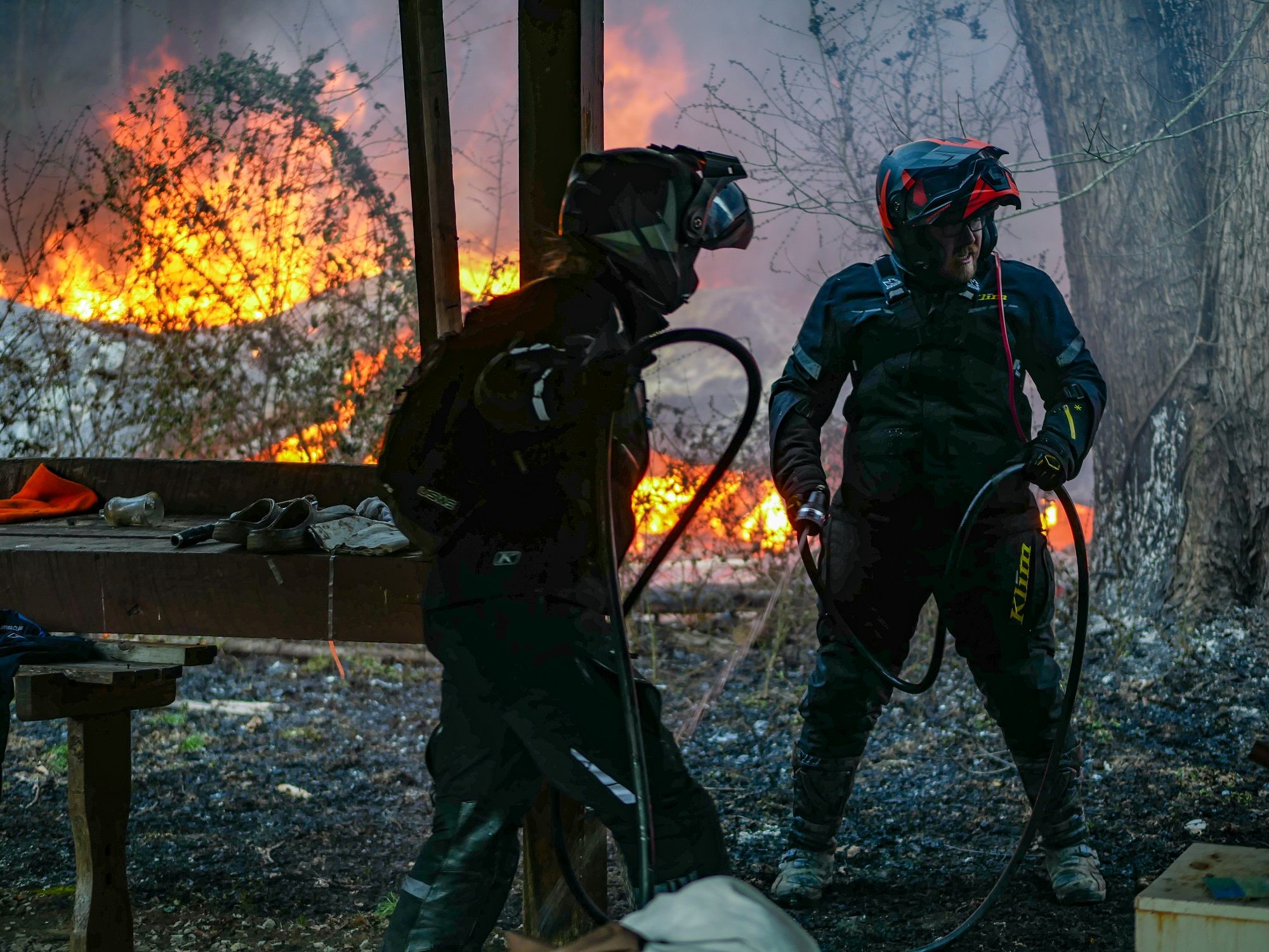
As we ride into the small town of Phelps, we realize the smoke is coming from a house fire. By the time we arrive, the structure is completely engulfed and has already been reduced to burning rubble. Nearby buildings are smoldering, and the woods behind the burning home are beginning to catch fire. A few neighbors are trying to contain the inferno but most are frozen, observing in stunned disbelief as many do in terrible situations. Marisa and I quickly find a place for our bikes, and without wasting time to remove our riding gear we rush to find hoses. As we run toward the blaze, we can feel the fire’s intense radiant heat, but surprisingly our gear helps to keep us slightly cooler. Without the aid of actual fire fighting equipment, the only assistance we can offer is in the form of containment.
An unfortunate fact of living in this rural part of the country is that emergency services are often distant, underfunded, and understaffed. After nearly an hour of struggling to contain the fire with inadequate equipment, we are relieved to hear the wail of sirens echoing through the valley; after firefighters arrive on the scene, our assistance is no longer needed. Adrenaline is still coursing through my body as I swing my leg over my motorcycle. We’re wet with sweat, and a chill comes over us as we ride—both from the cool mountain air and the somber reality of the events we’d just witnessed. It’s difficult to keep from wondering if everyone had made it out of the house before we arrived.
Matewan, WV
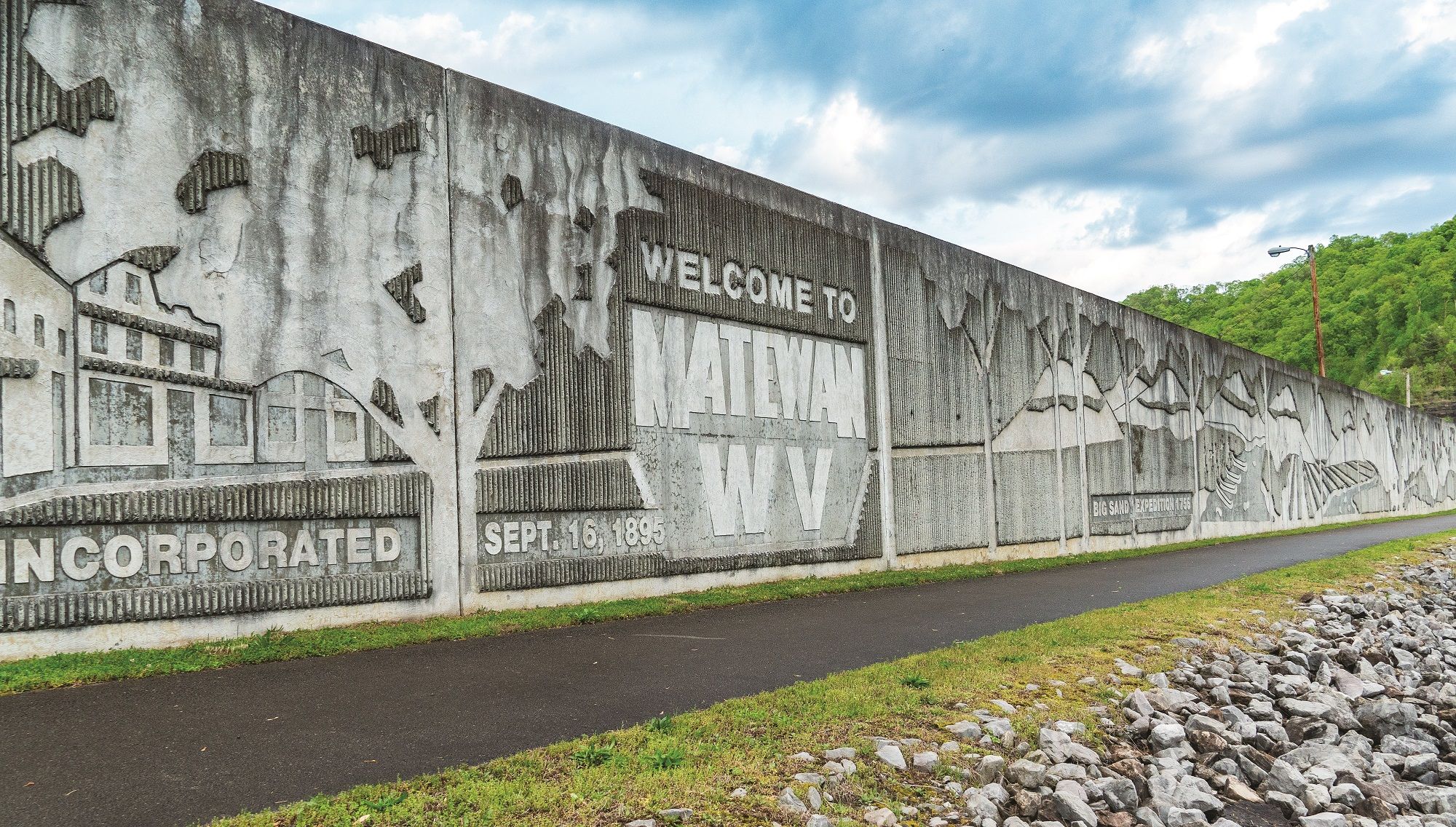
West Virginia Route 49 flows like an asphalt river, bending to the will of the mountains. As we descend into another deep valley, we pass through heavy steel gates of a wall fit for a fortress. Matewan is surrounded by the 2,350-foot-long concrete wall built by the Army Corps of Engineers to protect the town from repeated devastating floods of the Tug Fork River, which forms the border between Kentucky and West Virginia. The wall’s Kentucky-facing side is adorned with beautiful castings portraying the history of the town.
Matewan is located in the region where the Hatfield-McCoy feud took place in the 1800s and was the scene of the Matewan Massacre in 1920, which left seven private detectives, several miners, and the mayor dead. The detectives were sent to evict families living in the Stone Mountain Coal Co. camp outside of Matewan. After doing so, the agents were confronted by Sid Hatfield and several other men. Hatfield, Matewan’s chief of police, was sympathetic to the miners’ efforts to organize with the United Mine Workers and had refused to evict the families himself. The resulting shootout between the two parties marked a turning point in the miners’ battle for the right to fair working conditions and to unionize.
It’s late in the day as we turn onto Main Street and approach the Hatfield McCoy Resort Inn, where Don McCoy is sitting outside waiting to greet us. After Marisa and I freshen up, Kathy McCoy, Don’s wife, makes us a delicious dinner at the inn’s restaurant, Wingo’s Grill, and we stay up into the early morning discussing the region’s history.
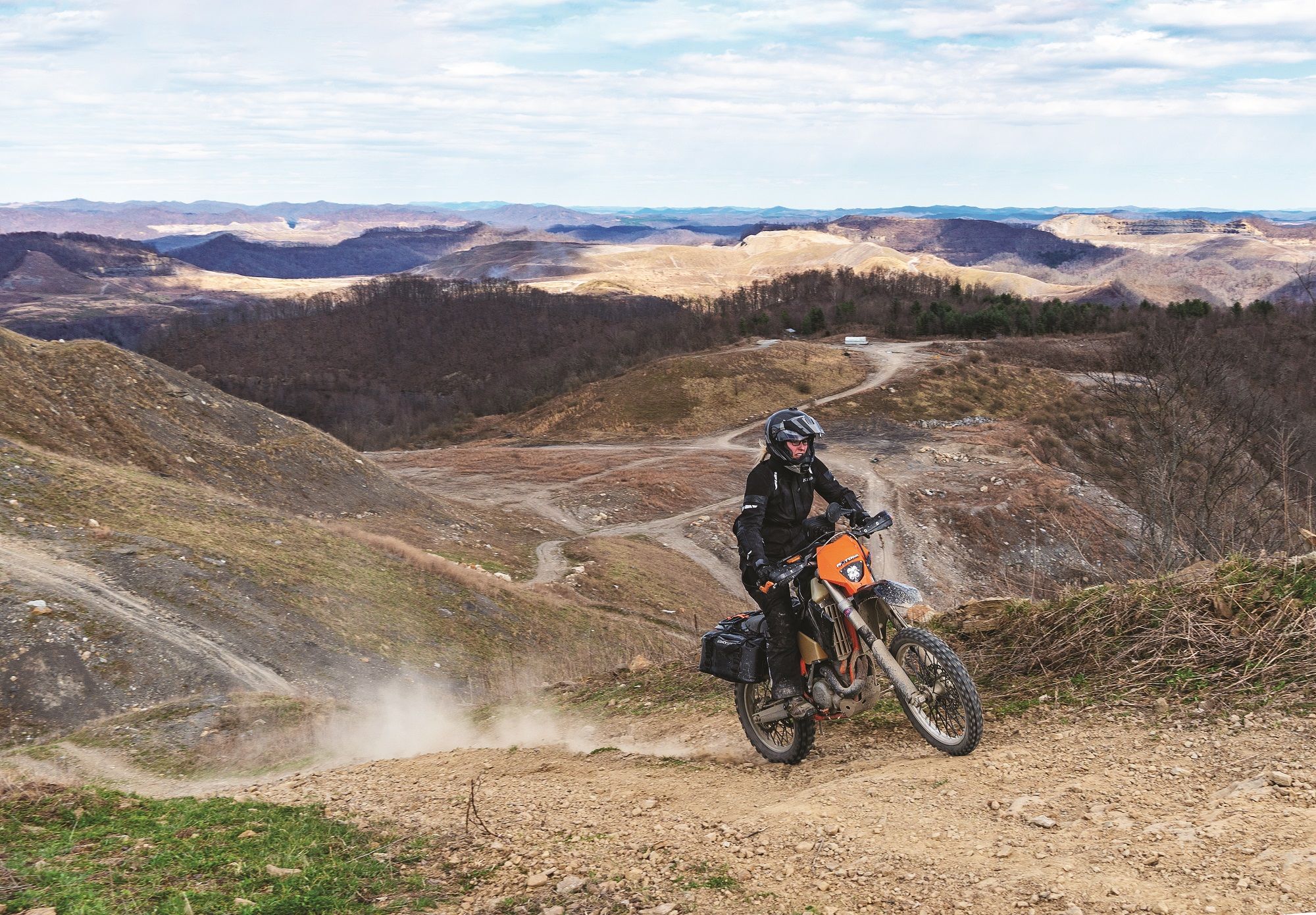
The McCoys invite us to stay another night and explore more of the area that Don has mapped out over the years. Since we’ve primarily been riding our dirt bikes on the road thus far, we are eager to take them up on the offer. The dirt riding around Matewan is some of the best you’ll find anywhere. The trails seem endless and vary in difficulty; additionally, nearly every hill climb rewards you with a great view. Due to the time of year, we seem to have the trails to ourselves, with the exception of a few ATVs and a herd of wild horses. The land, scarred by mining, is rocky and challenging in several places. I’m riding behind Marisa, who’s traveling on her freshly rebuilt KTM equipped with Cogent Dynamics suspension, and I can’t help but admire her ability to soak up anything the abandoned mines throw at her.
The KAT Continues
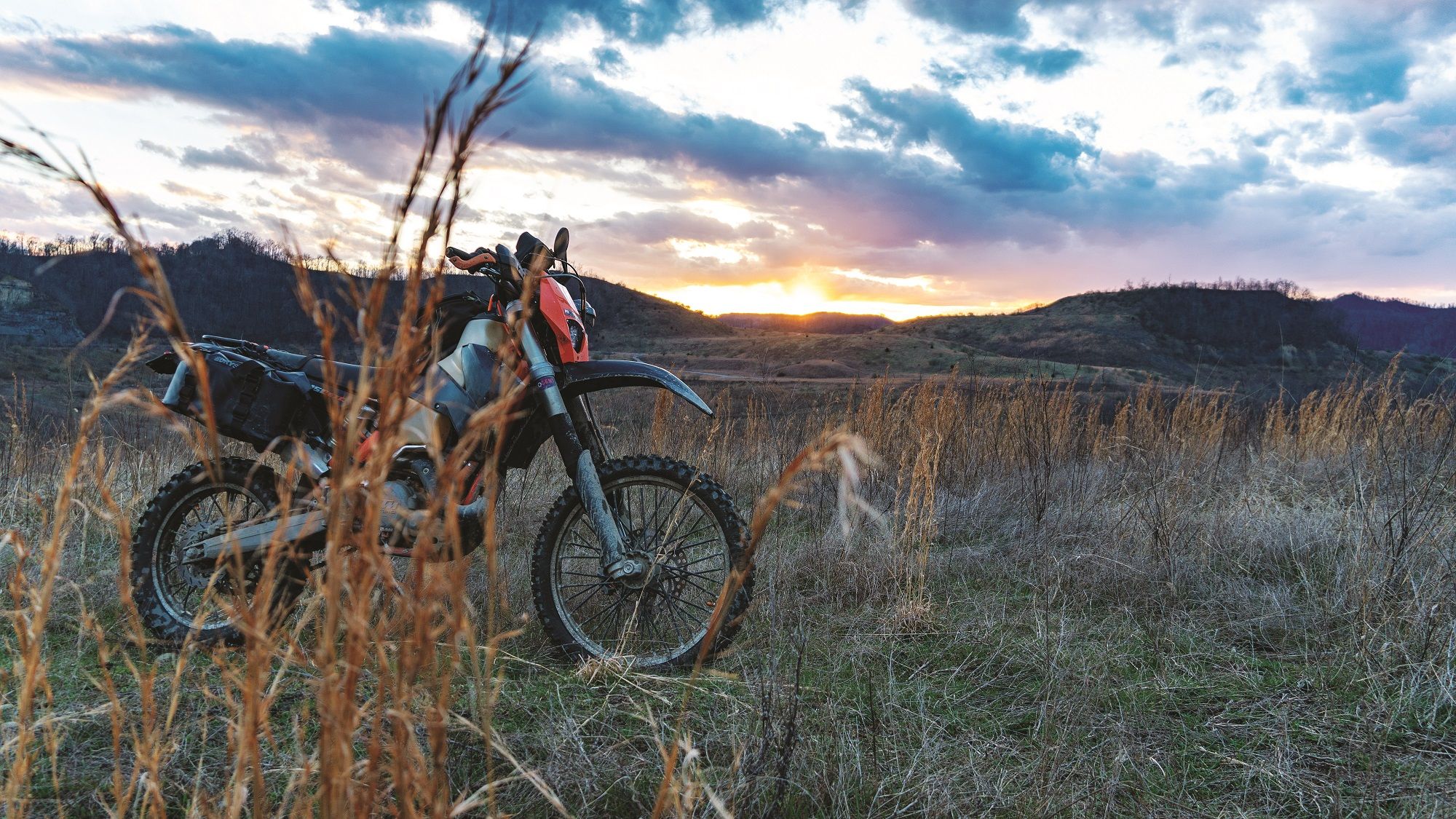
After saying our goodbyes to the McCoys, we hit the road, heading west as we begin to close the loop formed by the KAT. The country backroads eventually lead us to Mine Made Adventure Park, a 43,000-acre tract of reclaimed coal mining land containing miles of trails. We explore the park for a bit, and after watching a spectacular sunset we find a spot to set up camp where we warm ourselves and eat dinner around the fire before bed.
The following morning we take a short detour to a waterfall that’s tucked away down a steep, muddy trail within the park. The trail splits in every direction, and it would be easy to get lost out here, which we did—several times. After riding in a few circles, we find our way out of the park and to another off-road section of the KAT where, unfortunately, we come across several locked gates. We tried a nearby trail, hoping it would connect, but at the end of a long hill climb we realize what used to be a connection is now an overgrown dead end. Omitting that section of the route, we wind our way around the country backroads to reconnect on the other side.
As the day passes, we enjoy the dirt roads that follow ridgelines, and we eventually come through an area called Elk View. As we ride along the wide gravel road we catch a glimpse of a wild elk darting into some thick underbrush; spotting an elk, we’re told later, is a fairly rare occurrence, despite the area’s name. As darkness falls, we arrive in the town of Jackson and find shelter at Paul’s Motel. Paul greets us with jokes and a welcoming smile. He’s owned and operated the motel for over 50 years and is always excited when motorcyclists stop by. After much-needed showers, we walk to Kelsey’s on Main Street, where we enjoy our only hot meal of the day, Southern-fried catfish.
Loss of Traction
Unfortunately, the pavement has taken its toll on Marisa’s rear tire; the tread is almost completely gone. The plan is to go ahead and follow the route that continues west toward Red River Gorge and hopefully find a replacement along the way. We do end up finding a motorcycle shop that has a full line of new dirt bikes, but they don’t have an 18-inch tire of any type in stock. We ride on, realizing that without a replacement, our remaining time on the trip is limited.
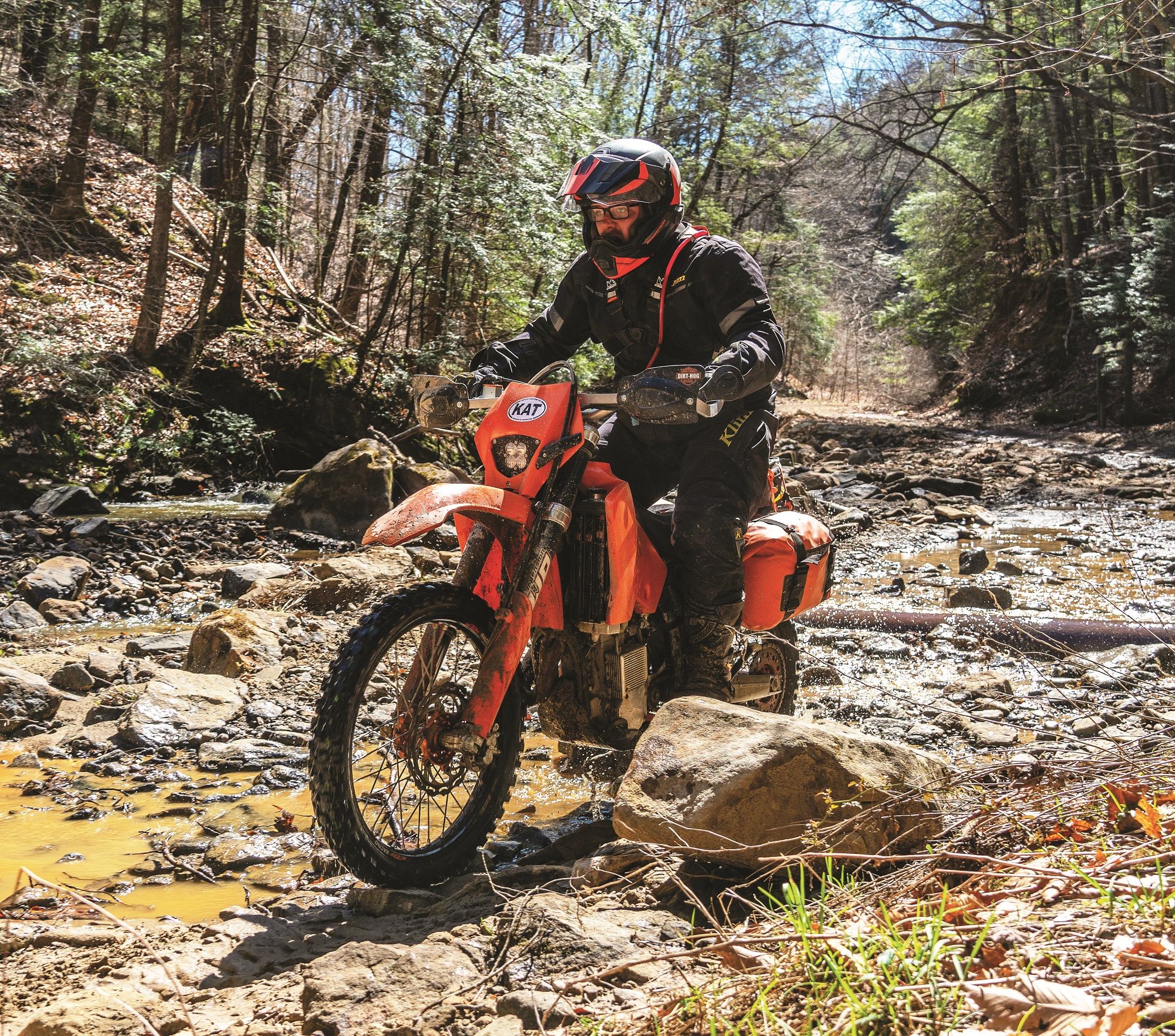
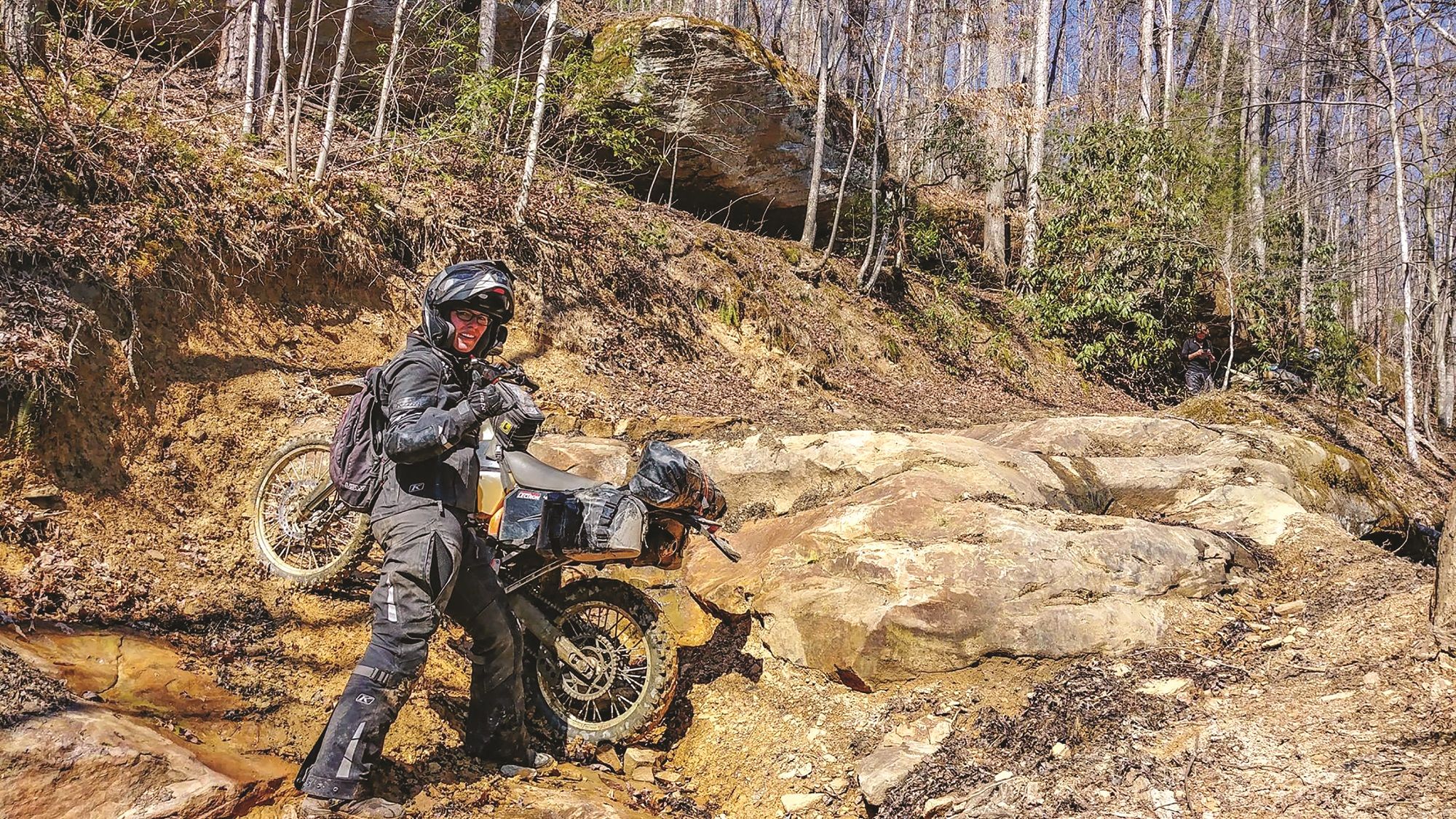
The next section of the route follows the Daniel Boone Backcountry Byway. We descend into the gorge through a particularly rocky section and spend the afternoon following the byway. With only a few miles of trail left, we begin to climb. The trail gets rocky again, and we come to a huge boulder embedded in the trail. We have two options: ride up a steep, muddy embankment on the left, or take the easier line on the right, next to a bluff. Marisa gives the left line a try, but with nothing remaining of her rear tire, she isn’t able to get traction and slides back down. We decide to play it safe and walk the bikes up the right. Shortly after, we come to another tricky section with 2-foot stepped rock ledges. We choose to make our own detour, bushwhacking a few feet off the trail.
The lack of rear tread combined with the fact that we’ve been riding harder sections of trail leaves us with the difficult decision to end the trip a few days early. Reluctantly, we finish the day by making our way back to Pineville.
Life in Appalachia
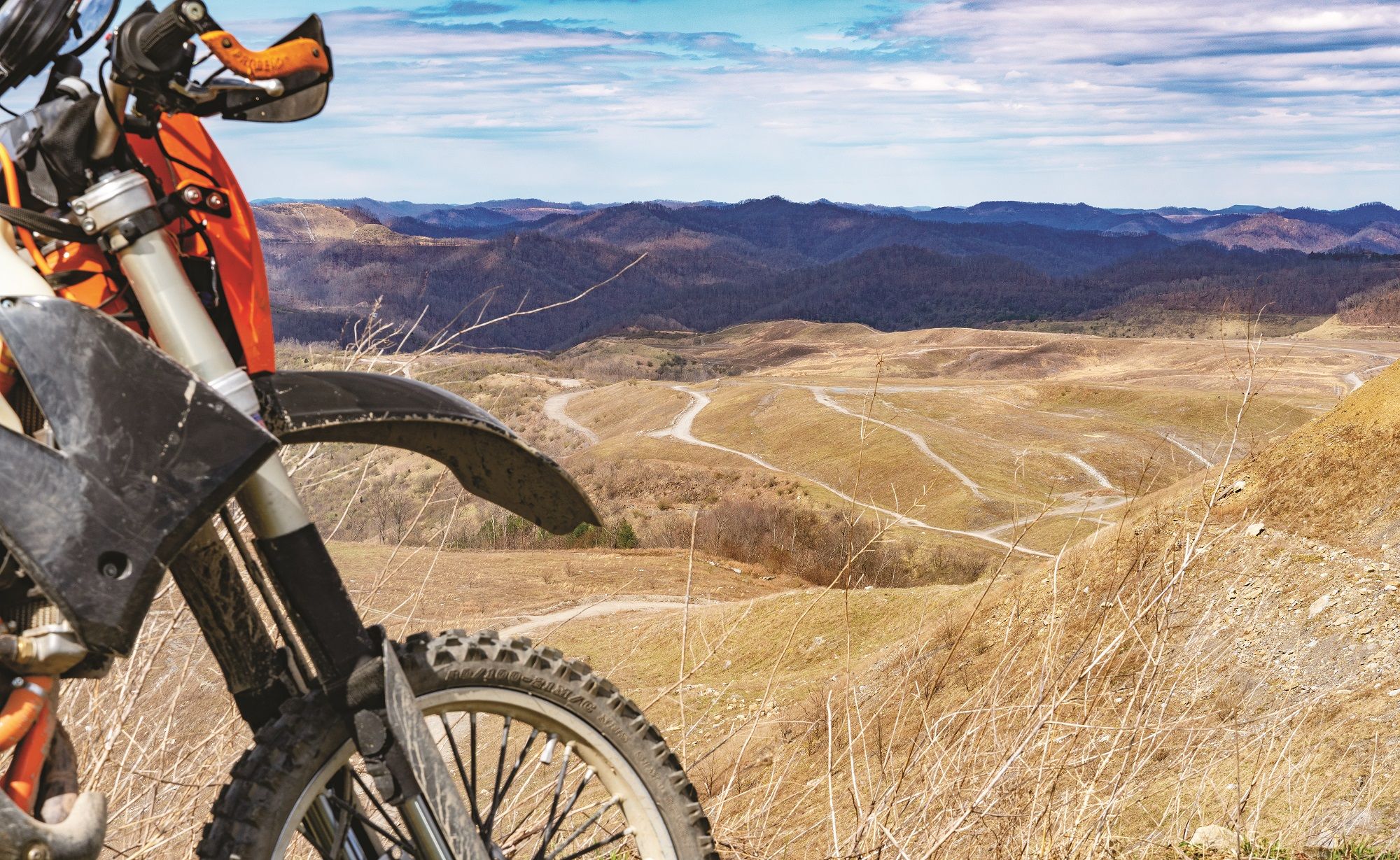
The extreme contrast of beauty and poverty in Appalachia is utterly daunting. As we traverse the mountains and ride through the tiny towns, it’s not uncommon to see particleboard structures, which many wouldn’t deem fit for a storage shed, housing families. Many of the towns listed on maps are nothing more than communities of shacks and mobile homes—no shops, restaurants, or fuel stations.
The socioeconomic disparities can be attributed to a wide variety of factors. Areas that were once sustained by the coal mining industry are now barely surviving as mining companies leave and take jobs with them. For every active mining operation we passed, there were two that were abandoned. It leaves you wondering how locals provide for themselves, aside from growing, hunting, and raising food. Many residents depend on government assistance, a situation not dissimilar to the payment of scrip, instead of traditional wages, which coal companies paid for use at their company stores during the early days of mining. Additionally, Appalachia has some of the highest unemployment rates and some of the lowest earnings per capita in the country. This combined with the declining coal production contributes to local governments generating less revenue to support social programs such as education, creating a perfect recipe for severe economic depression. Those with the means often leave the area, and the lack of skilled, educated workers further propagates Appalachia’s failure to attract new industry.
Being from Appalachian Tennessee myself, I want to make it clear that I’m in no way discouraging travel to this area—quite the opposite, in fact. Seeing the depression firsthand can provide a renewed perspective on the living conditions that many Americans face and demonstrate how lucky many of us are to be able to take time to travel for leisure.
One way to make a difference is to invest in these areas and help them evolve their economy by supporting local businesses when you travel though. Despite many in the area lacking vast monetary means, they are certainly wealthy in regard to hospitality, resilience, ingenuity, and charisma. Obviously, the issue is complex and the discussion surrounding it is far from new, but supporting the region in the form of tourism is a way to help our fellow Americans living in poor Appalachian communities. Nearly everyone is friendly and wants to know where you’re headed. Not once when we stopped to fix minor bike issues did someone fail to stop and offer help. The Southern hospitality, rich history, fantastic riding, and the alluring beauty of the Appalachian mountains are certain to keep you coming back.
The Real McCoy Trails
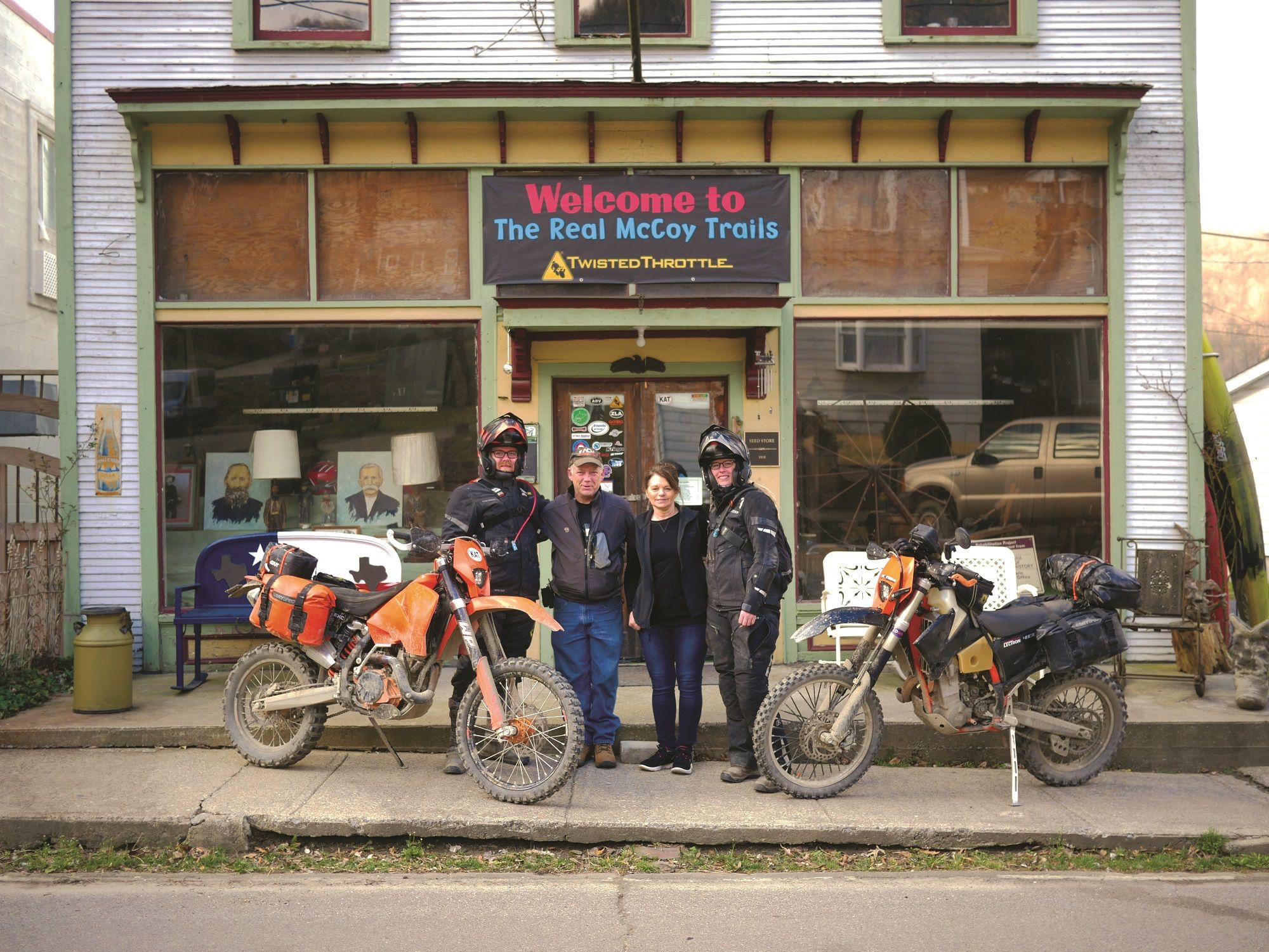
Fighting hard to breathe life back into the once prosperous mining town of Matewan, WV, and to preserve its history, Don and Kathy McCoy operate two businesses in historic downtown: the Hatfield McCoy Resort Inn and Wingo’s Grill. The lodging is reasonably priced and so is the fantastic food at the grill. The inn and restaurant are centrally located in some of the best riding areas you can find anywhere, with access to hundreds of miles of trails that vary in difficulty from beginner to extreme. If off-roading is not your cup of tea, there’s still plenty to see and do in Matewan. The local paved roads are twisty and offer excellent views around nearly every turn. Additionally, visiting this area is a must for history buffs. Matewan seems to be frozen in time. Evidence of the past can still be seen if you know where to look. Don is an avid proponent of motorcycling and has spent years riding and mapping the area around Matewan. He has developed what he calls The Real McCoy Trails, a collection of gravel and dirt roads and broken blacktop that any dual sport rider will enjoy.
Facts & Info
Distance: Approximately 900 miles
Overview
The Kentucky Adventure Tour, nearly 1,000 miles long, was created by local resident Jeff Stoess. It’s a dual sport loop that takes you through the backcountry of Kentucky, Tennessee, and West Virginia. It’s composed of a wide variety of roads, including pavement, gravel, dirt, and some more challenging off-road sections.
The route is quite remote, but the Kentucky and West Virginia mountains are beautiful and well worth a visit. If you’re looking to bounce between fine dining restaurants, you may want to look elsewhere for a ride, because this is a fairly backcountry ride. The best time to ride this route is fall or spring to avoid the summer heat and the potentially harsh winter weather.
Roads & Biking
I definitely recommend not riding the difficult sections alone, especially if you are planning on taking a large adventure bike. The vast majority of the ride is not too difficult, but there are some tricky bits that require well-honed dirt riding skills if attempted on a large bike.
Aggressive tires are also a must, again, especially for a big bike if you plan to ride the hard sections. The main loop consists mostly of pavement, broken pavement, and gravel roads.
The GPS file can be downloaded from Kentucky Adventure Tour's website.
Resources
Motorcycles & Gear
2007 KTM 525 EXC
2005 KTM 450 EXC with full Cogent Dynamics suspension
Helmet: Scorpion EXO-AT950 with Sena 10R communication system
Jacket: Klim Altitude, Klim Dakar
Gloves: Klim Dakar
Boots: Gaerne Balanced Oiled, Forma Adventure
Camping: Wilderness Technology DownLite 300 sleeping bag