Interview: Touring Between the U.S. and Italy
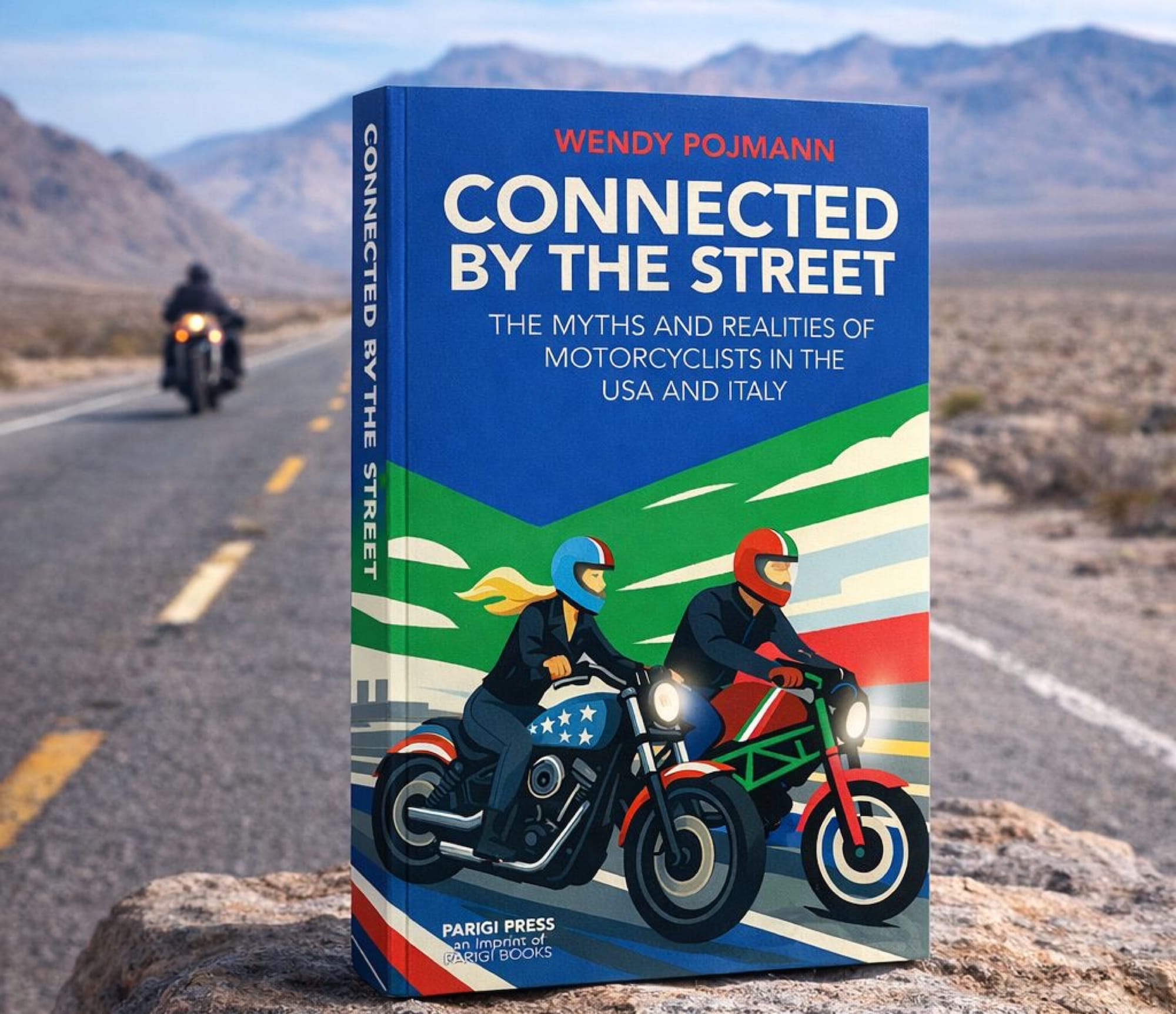
For Wendy Pojmann, motorcycle travel is as much about perspective as it is about place. A historian who splits her time between Schenectady, NY, and Rome, Italy, she has spent years riding in two cultures that approach motorcycling in fundamentally different ways.
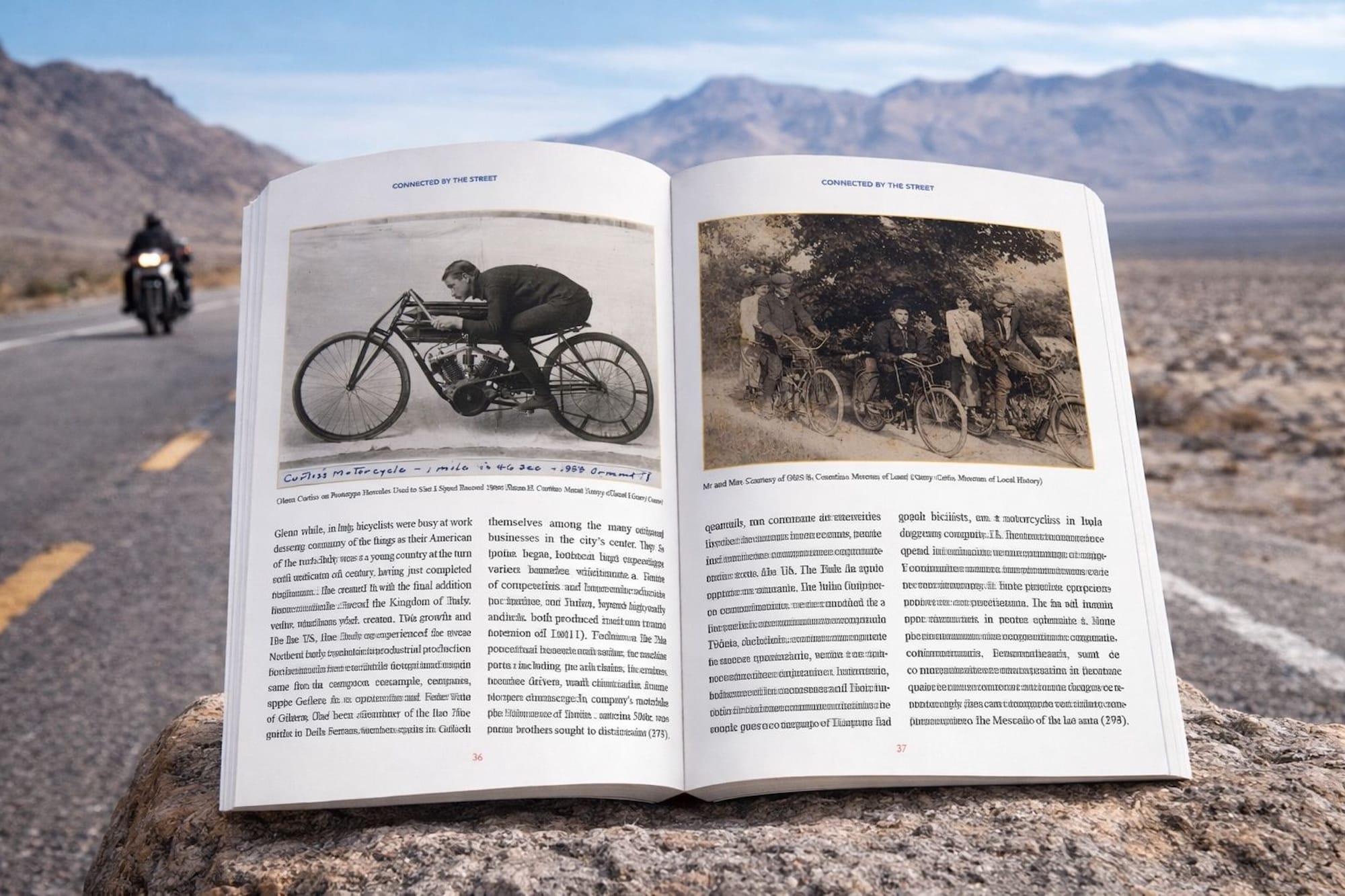
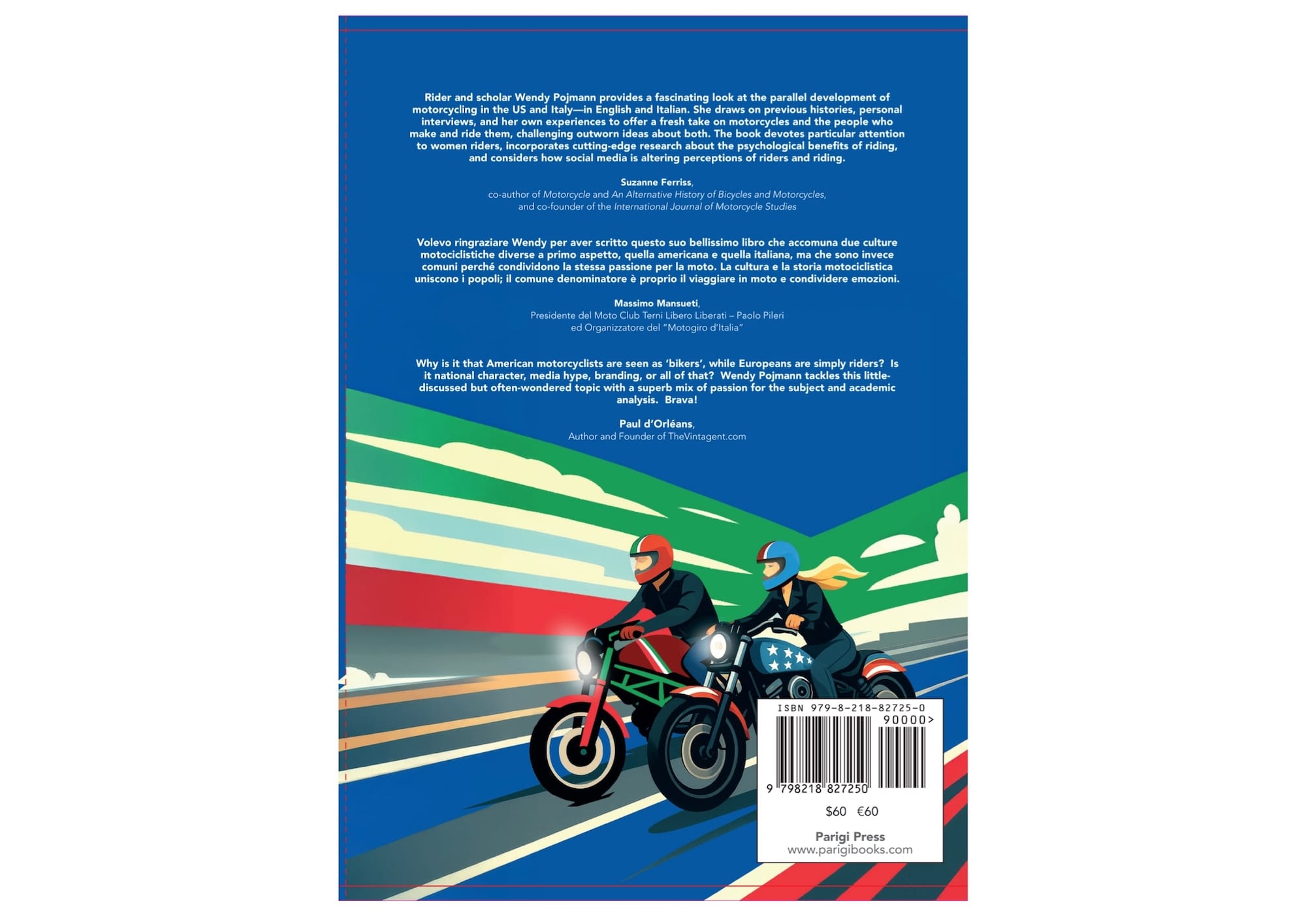
Her latest book, Connected by the Street: The Myths and Realities of Motorcyclists in the USA and Italy, explores those differences. For touring riders, she says, the real insight comes from experience: how the road feels, how the day unfolds, and how expectations shape the ride itself.
RoadRUNNER talked to Pojmann about her experiences, perspectives, and her new book.
When you plan a motorcycle trip in the U.S. versus Italy, how does your approach differ?
“In the U.S., I tend to think in terms of distance, such as how far I want to go, what roads I want to cover. There’s a sense of scale that invites longer days, at least in the summer,” Pojmann said.
“In Italy, the experience is more compressed. You might not travel as far in miles, but the riding is more challenging, and there are more natural stopping points.”
This difference defines the rhythm of a day on the bike, according to Pojmann. In the U.S., a satisfying ride to her might mean covering hundreds of miles, linking together scenic byways and long stretches of open road. In Italy, the same sense of fulfillment often comes from a shorter route punctuated by espresso stops, village pauses, and curves.
“In the U.S., motorcycle travel is often about the idea of the freedom of the open road and hitting iconic routes,” she said. “In Italy, riding is more integrated into daily life, so travel feels like an extension of that, but at the same time, it’s more special than riding just to get around town.”
How do road design and conditions change the way you ride?
“Italy demands your full attention,” explained Pojmann. “The roads are narrower, more technical, and constantly changing. You’re always engaged when cornering, reading surfaces, and watching the flow of cars, cyclists, pedestrians, and other two-wheeled travelers.”
In Italy, she sees the days unfolding differently. A ride might include your favorite pastry shop, lunch in a small town, or a climb into the hills or mountains. Routes near Lake Como, for example, combine tight switchbacks with dramatic scenery and invite frequent photo stops.
By contrast, many American roads, especially in regions like upstate New York, offer a mix of sweepers, open stretches, and twisties. “There’s more room to settle into the ride,” she said.
“The flow is more relaxed. Neither approach is necessarily better. They are just different.”
What should American riders know before touring Italy?
“Preparation matters more in Italy, especially if you are not familiar with the riding style,” Pojmann noted. “Flexibility is also key.”
She pointed out that fuel stops can be less predictable in Italy’s rural areas, and many towns enforce restricted traffic zones (ZTLs) that prohibit unauthorized vehicles in certain areas, usually close to the city center. At the same time, motorcycles benefit from easier parking and a general familiarity among drivers.
Pojmann continued, “It helps to know something about the rules. I also recommend being careful not to become vulnerable to theft.
“Lock your motorcycle. Don’t leave your belongings in your panniers overnight. No one wants their good experience compromised.”
Does the ideal touring bike change depending on where you ride?
“In Italy, smaller or midsized bikes often make more sense,” Pojmann said. “They’re easier to manage on narrow roads and in heavy traffic.”
Larger touring bikes are still popular, she added, but they can feel like a lot to handle in tight urban areas or on narrow mountain passes, especially for less experienced riders.
In the U.S., the equation unsurprisingly shifts. Historically, longer distances and broader roads favor larger machines with more comfort and storage capacity. But Pojmann encouraged riders not to feel restricted by common trends.
“I always say, you can ride anything anywhere if you want to,” she said.
What adjustments should American riders make when riding in Italy?
“The biggest adjustment is mental,” said Pojmann. “Traffic can feel chaotic at first, but there’s a shared understanding, a kind of choreography that unfolds. Drivers expect motorcycles to be there.”
Lane-splitting and filtering are part of that system, and riders move fluidly within traffic. In the U.S., where drivers are less accustomed to motorcycles in close proximity, unpredictability can be a greater concern.
If a RoadRUNNER reader had one week in Italy, what roads would you recommend?
Pojmann encouraged riders to look beyond the most famous destinations.
“There’s a tendency to fixate on bucket-list routes,” she said. “Americans often dream about riding the Stelvio Pass or the Amalfi Coast roads, and they’re spectacular. But they’re also very crowded, especially in peak season.”
That instinct, she noted, goes both ways.
“Italians have their own version of this. They love the idea of coming to the U.S. and riding Route 66 on a big American cruiser. For them, this long, iconic journey represents freedom and an idea of America they’ve seen in films and television.”
In both cases, the myth is powerful, but it can also be limiting.
“There are so many other options,” Pojmann said. “In Italy, you can find incredible mountain passes with just as much technical challenge and beauty as the Stelvio, but without all the other vehicles. And in the U.S., there are endless backroads that offer a fun experience as much as sticking strictly to Route 66.”
Her advice is to be inspired by the iconic routes but not feel obligated to ride them. “I highly recommend an event, such as the Motogiro d’Italia, that takes you on lesser-known routes and lets you focus on riding,” Pojmann suggested. She participated in the six-day historical reenactment five years ago and would love to do it again.
“You don’t have to carry your luggage on the bike. The routes are marked with arrows so you always have your eyes on the road, and the food is, of course, fantastic, as are the friends you make.
“Of course, some of the best trips leave room for discovery,” she said. “Memorable rides also happen when you take a turn you didn’t plan and get a little lost.”
What’s the one takeaway readers should be left with after reading your book?
After years of riding in both countries, Pojmann doesn’t frame the experience as a choice between the two. Instead, she sees them as complementary ways of understanding motorcycle travel.
“In the U.S., you have room to ride, to think, to go far,” she said. “In Italy, everything is closer together, more intense, more immediate.”
For touring riders, that contrast offers something valuable: the chance to rethink what makes a great ride. It’s not just the road itself, but how you move through it and what you notice along the way.
“The ride,” she said, “is ultimately what connects us all. That’s a fundamental idea I wanted to get across in my book.”